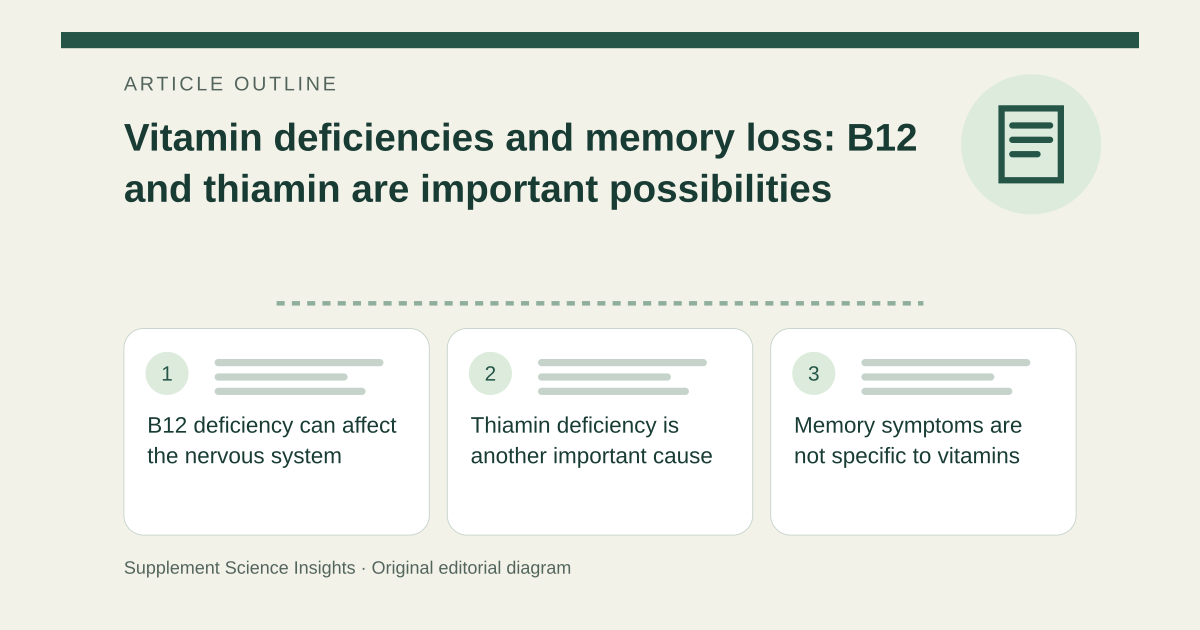
B12 deficiency can affect the nervous system
ODS describes neurological and cognitive manifestations of B12 deficiency, which can arise from poor intake, impaired absorption, gastrointestinal surgery or some medicines. Neurological effects can occur without the classic anemia, so a normal appearance or lack of obvious anemia does not settle the question. [1]
Thiamin deficiency is another important cause
ODS describes confusion and short-term memory loss with thiamin deficiency, and severe memory problems in Wernicke–Korsakoff syndrome. Risks include alcohol dependence and serious nutritional or gastrointestinal problems. Suspected severe neurological deficiency requires prompt medical treatment, not a routine over-the-counter memory blend. [2]
Memory symptoms are not specific to vitamins
NHS notes that stress, anxiety, depression and sleeping problems can contribute to memory difficulties. Other causes may need assessment. Persistent changes affecting everyday life should be discussed with a clinician rather than assumed to be ordinary aging or a nutrient gap. [3]
Replacement and enhancement are different goals
Treating an established deficiency is not evidence that extra B12 improves cognition in people with adequate status. The cause, duration and severity of a deficiency can affect recovery. Avoid promises that a particular dose or supplement stack will reliably restore memory. [1][2]
Use concrete examples of the change
Imagine a person begins missing medicines or repeatedly forgetting recent conversations. Bring those examples, diet history, alcohol use and medicines to the assessment. A targeted deficiency treatment can then be chosen if needed, alongside evaluation of other explanations. [3][1][2]
| Question | Why it matters |
|---|---|
| Diet and absorption history | B12 risk |
| Severe undernutrition or alcohol dependence | Thiamin risk |
| Daily functioning | Need for broader assessment |
| Confirmed deficiency | Targeted treatment rather than enhancement claims |
Sources for this article
- Vitamin B12 - Health Professional Fact Sheet
Source consulted: 2026-09-21. This is a reference resource, not a claim that we conducted the studies or tested a product. - Thiamin - Health Professional Fact Sheet
Source consulted: 2026-09-21. This is a reference resource, not a claim that we conducted the studies or tested a product. - Memory loss (amnesia) - NHS
Source consulted: 2026-09-21. This is a reference resource, not a claim that we conducted the studies or tested a product.