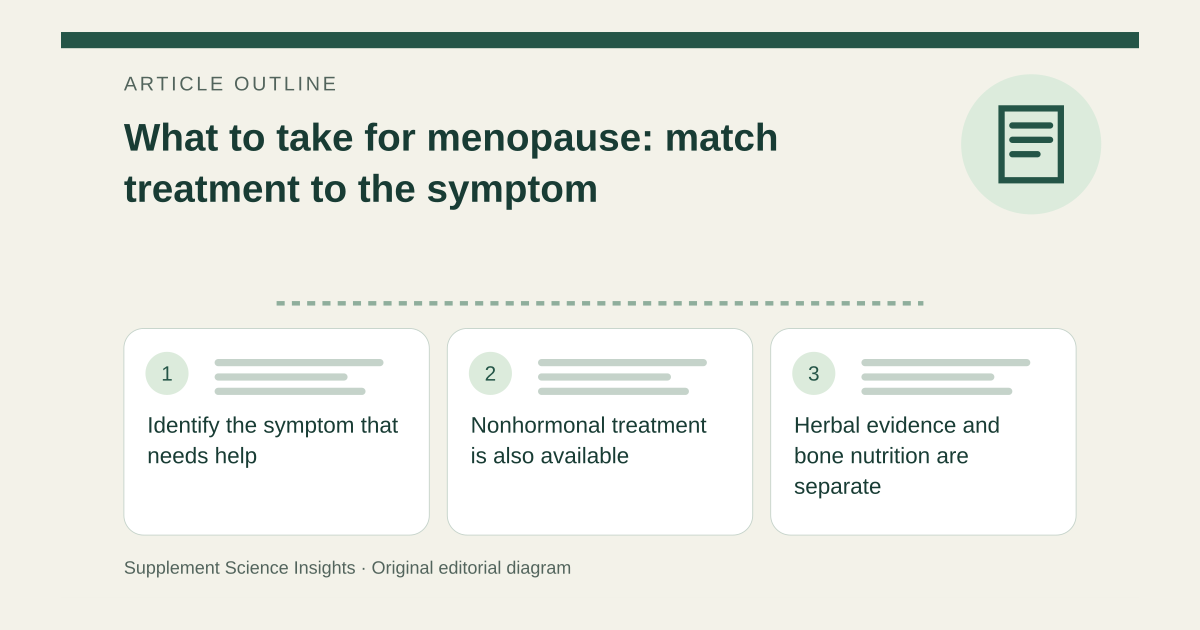
Identify the symptom that needs help
NHS advises discussing HRT and other options with a health professional. Estrogen may be systemic or used locally for vaginal symptoms. Someone who has a uterus generally needs progestogen alongside systemic estrogen to protect the womb; treatment selection depends on personal history. [1]
Nonhormonal treatment is also available
If HRT is unsuitable or unwanted, alternatives can include menopause-focused CBT and selected medicines for particular symptoms. Low mood or depression may need its own treatment plan. A single supplement label cannot establish suitability for all these problems. [1]
Herbal evidence and bone nutrition are separate
NHS describes limited evidence for the effectiveness and safety of remedies such as red clover and black cohosh, including interaction concerns. Adequate vitamin D supports bone health, but that does not establish it as a hot-flush treatment. Correct a nutritional gap for the relevant reason. [1][2]
Ask what outcome the product is meant to change
Imagine a menopause blend is bought for vaginal dryness but its marketing focuses on general energy. Ask about treatment specifically for the dryness, while reviewing any nutrient or medicine needs separately. Use symptom improvement and tolerability to assess the plan. [1][3]
| Option or finding | Practical implication |
|---|---|
| Hot flushes | Discuss HRT or suitable alternatives |
| Vaginal symptoms | Ask about targeted local treatment |
| Vitamin D intake | Bone-health role, not a universal symptom cure |
Sources for this article
- Treatment for menopause and perimenopause - NHS
Source consulted: 2026-09-20. This is a reference resource, not a claim that we conducted the studies or tested a product. - Vitamin D - Health Professional Fact Sheet
Source consulted: 2026-09-20. This is a reference resource, not a claim that we conducted the studies or tested a product. - Dietary Supplements: What You Need to Know
Source consulted: 2026-09-20. This is a reference resource, not a claim that we conducted the studies or tested a product.