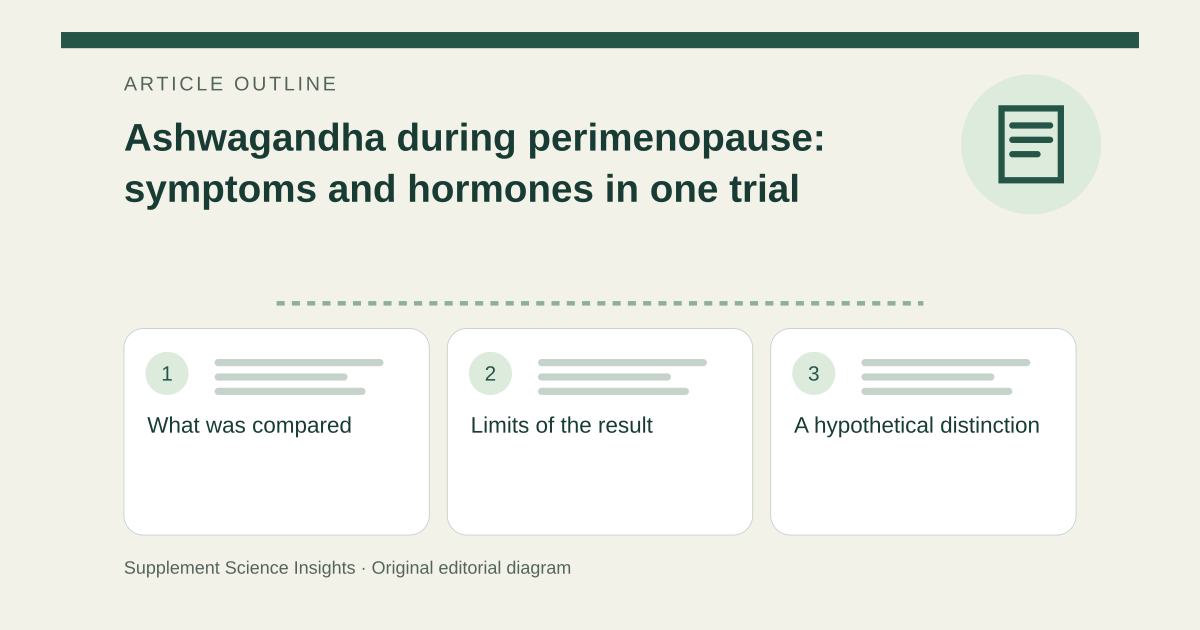
What was compared
One hundred women with climacteric symptoms were randomized to root extract or placebo for eight weeks; 91 completed the trial. Outcomes included menopause symptom scales, quality of life and hormone measurements. [1]
Symptom and quality-of-life scores favored the extract. Estradiol increased and FSH and LH declined relative to placebo, while testosterone did not significantly differ. [1]
Limits of the result
This was an extract-specific, short study during perimenopause. It did not directly compare the preparation with hormone therapy or establish long-term reproductive, cancer or cardiovascular outcomes. Funding and conflicts were not established from the abstract. [1]
A hypothetical distinction
Imagine two treatments are each studied separately against placebo. Even if both show a signal, those separate studies do not establish that the treatments are equally effective or equally safe.
| Detail | Interpretation |
|---|---|
| Eight weeks | Limited follow-up |
| Some hormone measures | Changed |
| Treatment equivalence | Not tested |
Sources for this article
- Effect of an ashwagandha (Withania Somnifera) root extract on climacteric symptoms in women during perimenopause: A randomized, double-blind, placebo-controlled study - PubMed
Source consulted: 2026-09-19. This is a reference resource, not a claim that we conducted the studies or tested a product.