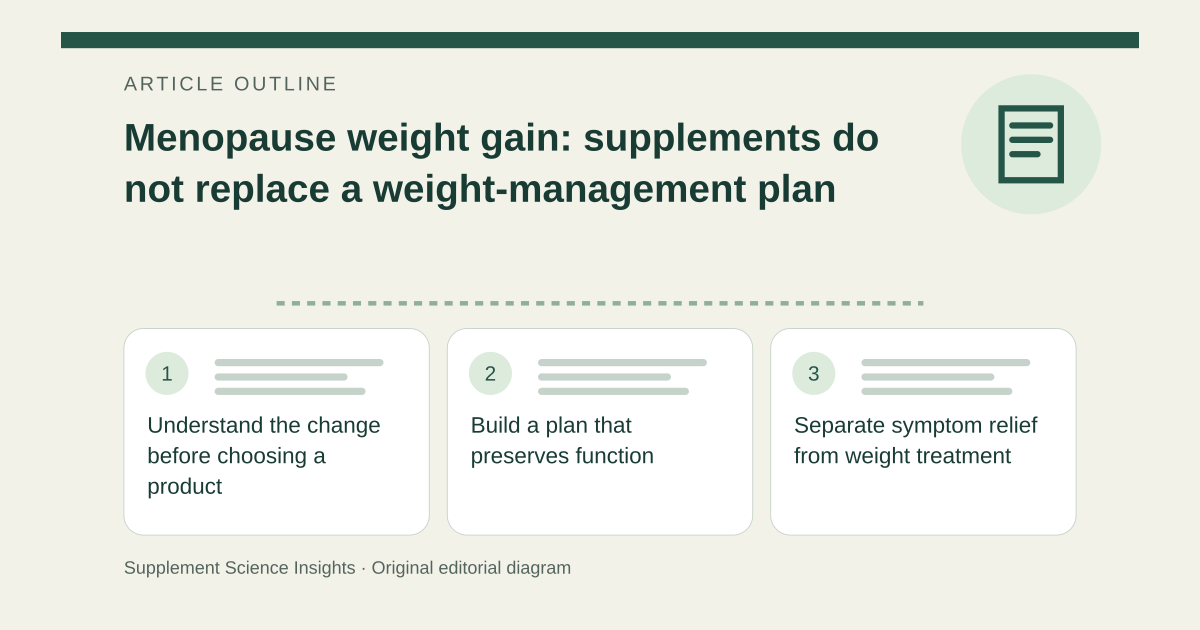
Understand the change before choosing a product
The Menopause Society describes aging as a major driver of midlife weight gain, with menopause contributing to abdominal fat redistribution. Sleep disruption, stress, eating patterns and activity also play a role. That makes a single hormone-balance supplement an oversimplified answer. [1]
Build a plan that preserves function
The Society emphasizes balanced eating, adequate protein, aerobic activity and strength training. NIDDK recommends a sustainable plan adapted to personal preferences and health. A supplement may fill an identified nutritional gap, but that is different from producing weight loss independently. [1][2]
Separate symptom relief from weight treatment
Hormone therapy can treat appropriate menopause symptoms and may make sleep and activity easier, but it is not a direct weight-loss treatment. Discuss symptom management and weight management as related but separate decisions. [1]
A larger supplement stack is not the next automatic step
Evidence for weight-loss supplements is limited, and products can create adverse effects or interactions. If lifestyle measures are insufficient, clinicians can assess whether evidence-based weight treatments are appropriate rather than substituting another unproven blend. [3][4][1]
Identify the barrier that can actually be changed
Imagine night sweats disrupt sleep and fatigue reduces activity. Addressing symptoms and building a practical eating and movement plan is more targeted than adding a menopause fat-burner. Track health, strength and sustainable habits alongside weight. [1][2]
| Situation | Useful next step |
|---|---|
| Menopause symptoms disrupt sleep | Discuss symptom treatment |
| Protein or dietary gap | Address the actual nutritional need |
| Persistent weight-related health concerns | Review structured treatment options |
Sources for this article
- The Menopause Society: Midlife Weight Gain
Source consulted: 2026-09-20. This is a reference resource, not a claim that we conducted the studies or tested a product. - Choosing a Safe & Successful Weight-loss Program - NIDDK
Source consulted: 2026-09-20. This is a reference resource, not a claim that we conducted the studies or tested a product. - Dietary Supplements for Weight Loss — NIH ODS
Source consulted: 2026-09-20. This is a reference resource, not a claim that we conducted the studies or tested a product. - Dietary Supplements: What You Need to Know
Source consulted: 2026-09-20. This is a reference resource, not a claim that we conducted the studies or tested a product.