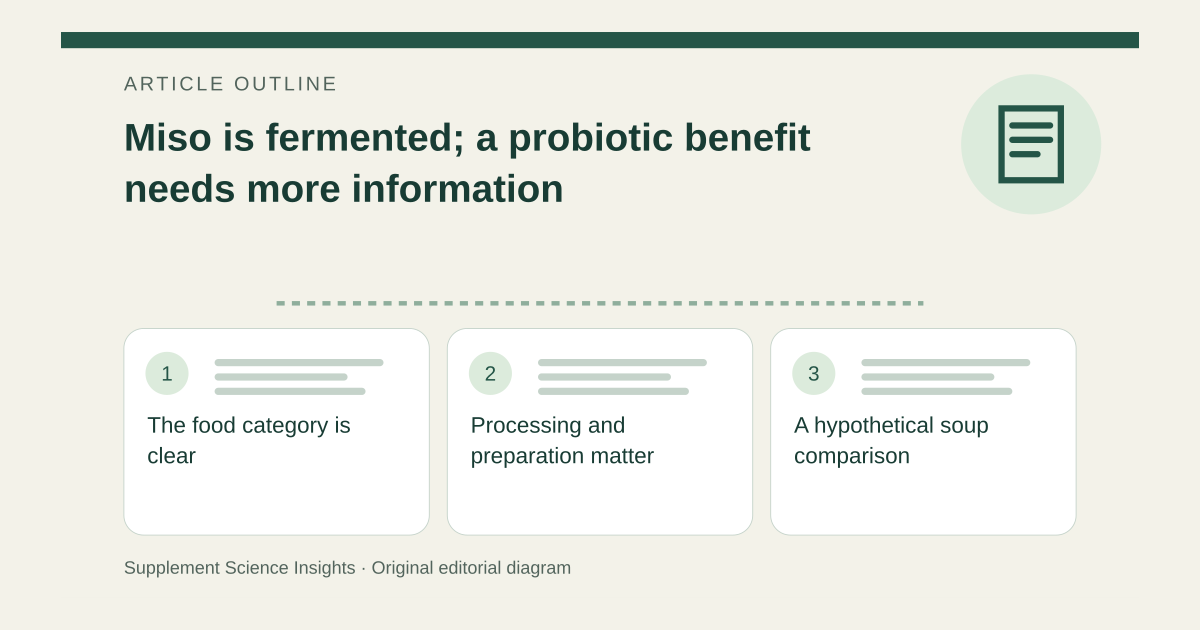
The food category is clear
NIH ODS lists miso among fermented foods that can contain live cultures but do not typically contain proven probiotic microorganisms. This does not mean miso has no nutritional or culinary value. It means that fermentation and a demonstrated probiotic effect are different claims. [1]
Processing and preparation matter
A product’s treatment and how it is used can change whether organisms remain viable. A paste sold for cooking and a tested strain preparation are not interchangeable simply because both involve bacteria. Do not infer a clinical dose from teaspoons of an unspecified miso or assume every batch has the same microbiology. [1]
A hypothetical soup comparison
Imagine miso is added to two different soups, one heated further and one served without further heating. The recipes alone still do not establish a verified strain count or health outcome. If a product claims a specific probiotic effect, evaluate its organism and supporting evidence rather than assigning that claim to all miso. [1]
| Hypothetical information | What it tells you |
|---|---|
| Miso ingredient | Fermented soybean-based food |
| Named strain and viable amount | More specific microbial information |
| Relevant clinical evidence | Needed for a defined probiotic benefit |
Sources for this article
- Probiotics - Health Professional Fact Sheet
Source consulted: 2026-09-20. This is a reference resource, not a claim that we conducted the studies or tested a product.