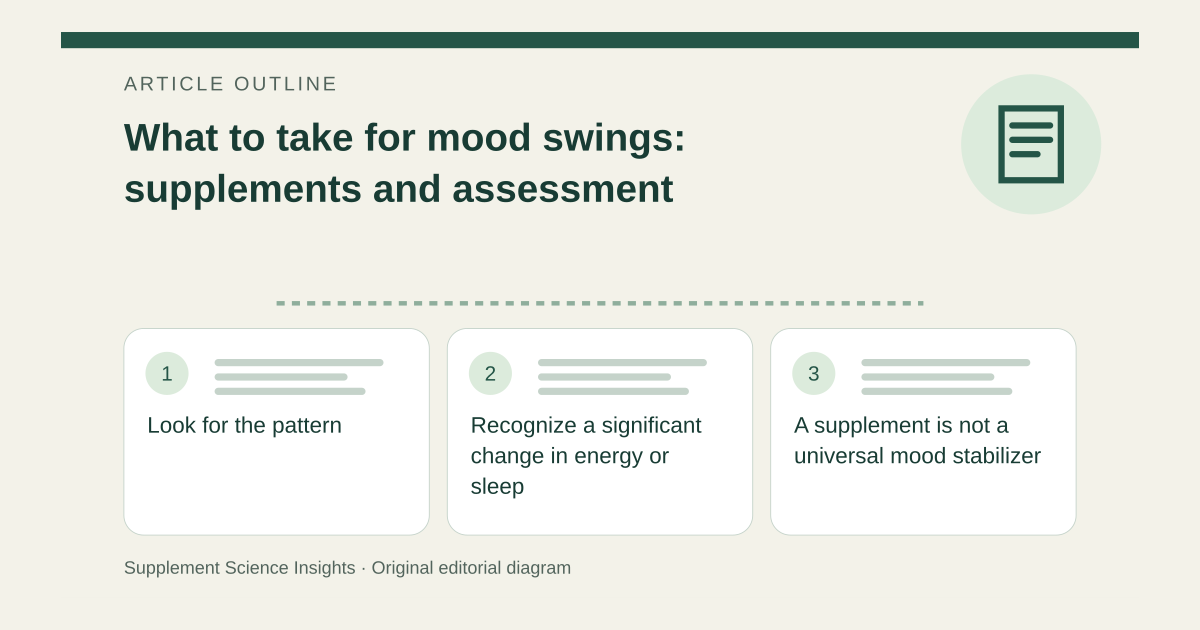
Look for the pattern
Record mood changes alongside sleep, medicines, alcohol, major stressors and menstrual timing when relevant. NHS guidance recommends a cycle diary for suspected PMS. Symptoms occurring throughout the month should not automatically be attributed to premenstrual hormones. [1]
Recognize a significant change in energy or sleep
NIMH describes manic or hypomanic episodes as changes in mood with energy, activity and behavior, sometimes including greatly reduced need for sleep or impulsive actions. These are not diagnosed from one bad day, but a marked sustained change needs prompt professional assessment. [2]
A supplement is not a universal mood stabilizer
Correcting a confirmed nutritional problem has a different purpose from treating a mood disorder. Even PMS supplement evidence is limited. Prescription mood stabilizers and psychotherapy have defined roles in bipolar care; an over-the-counter mood blend cannot inherit that evidence. [1][2][3]
Choose care according to severity
Imagine recurring mood changes disrupt relationships and sleep. Bring the pattern to a clinician rather than adding several serotonergic or stimulating products. If someone feels unable to stay safe, has suicidal intent or develops dangerous behavior, seek immediate emergency support. [2][3]
| Situation | Next consideration |
|---|---|
| Cycle-linked symptoms | Track the pattern |
| Very little sleep and marked activation | Prompt assessment |
| Nutrient gap | Treat specifically |
| Immediate safety risk | Emergency support |
Sources for this article
- PMS (premenstrual syndrome) - NHS
Source consulted: 2026-09-21. This is a reference resource, not a claim that we conducted the studies or tested a product. - Bipolar Disorder - National Institute of Mental Health (NIMH)
Source consulted: 2026-09-21. This is a reference resource, not a claim that we conducted the studies or tested a product. - Dietary Supplements: What You Need to Know - Consumer
Source consulted: 2026-09-21. This is a reference resource, not a claim that we conducted the studies or tested a product.