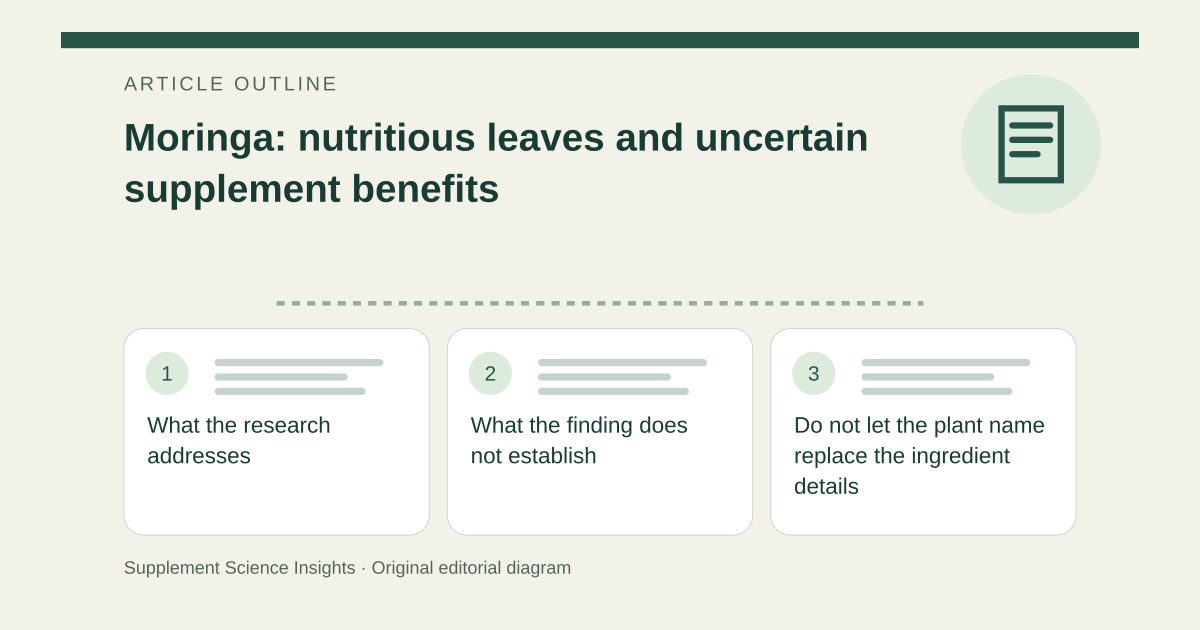
What the research addresses
Moringa leaves and seed pods are eaten as food; roots, bark and concentrated extracts are also used in remedies. MSK describes limited human evidence and calls for better studies of metabolic uses. Nutritional value does not establish that a supplement treats diabetes or causes weight loss. [1]
What the finding does not establish
An insulin response or a small lipid change is not the same as a demonstrated improvement in long-term health. Findings about leaf powder should not be transferred to root or bark products. [1]
Do not let the plant name replace the ingredient details
Suppose one study uses a leaf powder while a product contains a concentrated root extract. The shared plant name does not make the two interventions equivalent. A fair comparison would preserve the plant part, extraction method and actual amount rather than collapsing them into “moringa.”
Also ask whether a headline describes nutrition or treatment. Adding a food to a diet, changing a laboratory marker and improving a diagnosed condition are different questions. A study can contribute to one without settling the others. This distinction makes it easier to recognize when a product promise stretches beyond its citation.
| Hypothetical finding or choice | What it means |
|---|---|
| Leaf powder studied | Keep the plant part and preparation |
| Root extract offered | Needs evidence of its own relevance |
| A nutrient-content claim | Does not establish disease treatment |
Safety and treatment considerations
MSK advises avoiding moringa during pregnancy and breastfeeding. Serious allergic and skin reactions have been reported. Proposed interactions with drug-metabolizing enzymes and sitagliptin are based on preclinical findings with uncertain relevance to people. [1]
A practical next step
No moringa brand or dose is recommended. For a metabolic-health goal, discuss the relevant diagnosis, medicines and measurable outcome rather than treating a nutrient-rich plant as a complete treatment plan.
Sources for this article
- Memorial Sloan Kettering Cancer Center — Moringa oleifera
Source consulted: 2026-09-17. This is a reference resource, not a claim that we conducted the studies or tested a product.