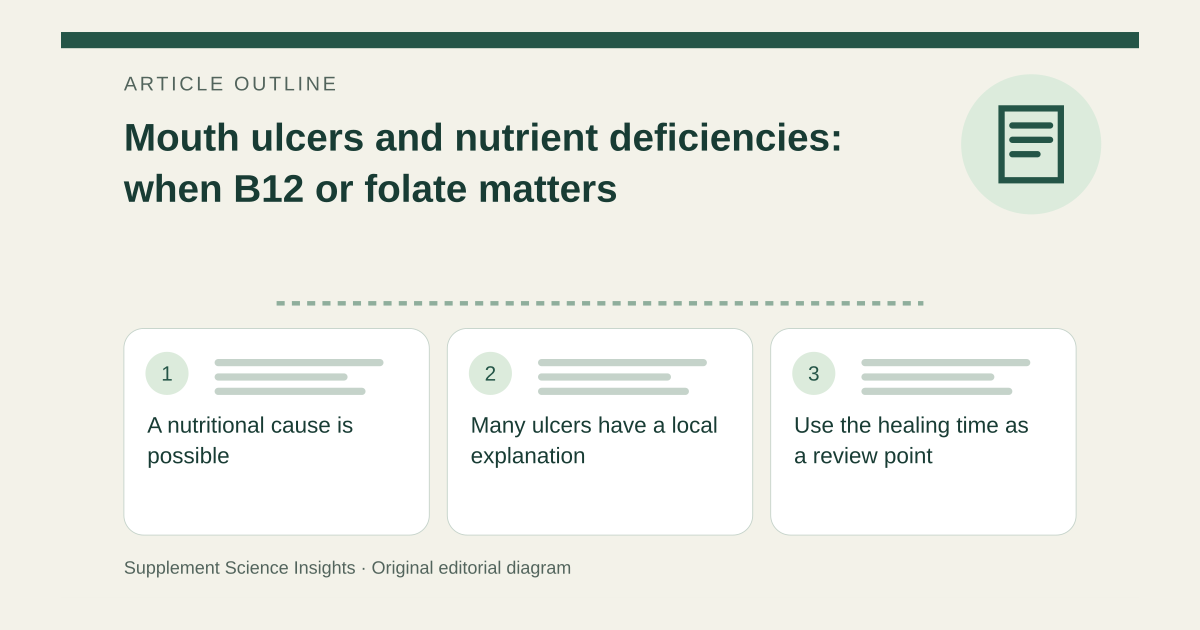
A nutritional cause is possible
NHS guidance includes mouth ulcers among possible B12 or folate deficiency symptoms. Assessment can combine history, examination and blood testing. An ulcer alone cannot distinguish between these deficiencies or show whether absorption, diet or another issue is involved. [1]
Many ulcers have a local explanation
Cheek biting, a sharp tooth, poorly fitting dental appliances and irritation can cause ulcers. Multiple or recurrent lesions can have other explanations too. Treating a confirmed deficiency is different from assuming every sore needs a B-vitamin tablet. [2]
Use the healing time as a review point
NHS advises seeing a dentist or doctor for an ulcer lasting more than three weeks, or one that is unusual, bleeds or becomes more painful. Imagine a sore stays in the same place despite supplements: have it examined instead of repeatedly changing vitamin brands. [2]
| Situation | Useful distinction |
|---|---|
| Confirmed B12 or folate deficiency | Treat and investigate the cause |
| Sharp tooth next to the ulcer | Consider local injury |
| Ulcer beyond three weeks | Arrange examination |
Sources for this article
- Vitamin B12 or folate deficiency anaemia - NHS
Source consulted: 2026-09-20. This is a reference resource, not a claim that we conducted the studies or tested a product. - Mouth ulcers - NHS
Source consulted: 2026-09-20. This is a reference resource, not a claim that we conducted the studies or tested a product.