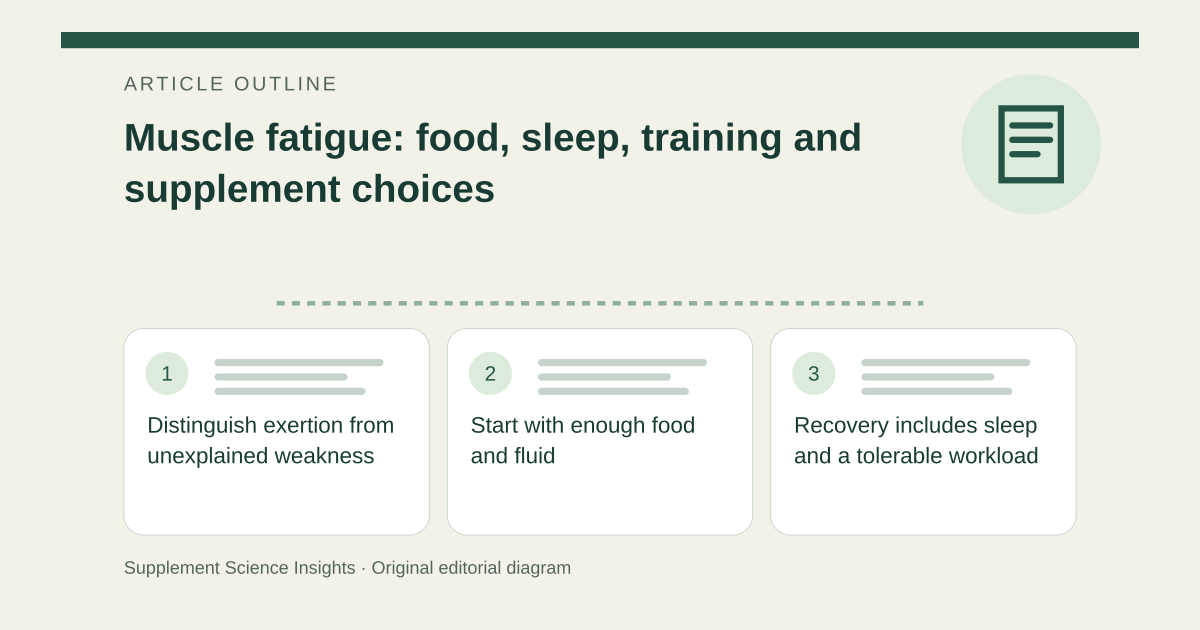
Distinguish exertion from unexplained weakness
Temporary fatigue after a demanding workout differs from persistent weakness or fatigue that affects ordinary activity. NHS advises assessment when tiredness persists without explanation or disrupts daily life. Severe muscle pain or weakness with dark urine can indicate rhabdomyolysis and needs urgent medical attention. [1][2]
Start with enough food and fluid
ODS emphasizes adequate diet and hydration as the basis of exercise performance. Include carbohydrate-containing foods for training fuel and protein foods for repair, rather than replacing meals with an energy supplement. Beans, eggs, fish, meat, dairy or suitable alternatives can help build an appropriate varied eating pattern. [3][4]
Recovery includes sleep and a tolerable workload
Regular sleep timing and attention to sleep quality matter when fatigue is persistent. Review whether training demands, recovery and daily intake fit together. Do not force through worsening symptoms on the assumption that more exercise or stimulants will fix every form of fatigue. [1][3]
Protein and creatine have different jobs
Protein supports muscle maintenance and adaptation, with powder useful when it helps meet an actual intake need. Creatine has evidence for repeated high-intensity efforts and strength-related training, but it is not a universal endurance aid or treatment for unexplained muscle weakness. The training goal matters more than an all-purpose recovery label. [3]
Deficiency treatment is targeted
Iron deficiency and B12 deficiency can contribute to fatigue, and vitamin D deficiency can affect muscle function. Testing and treatment should fit the symptoms and risk factors. Extra nutrients do not automatically improve performance when intake and status are already adequate. [1][5][6][3]
Review the pattern before adding products
Imagine fatigue begins after increasing training while skipping meals and sleeping less. Address those changes and seek assessment if symptoms persist. A protein shake may fill a food gap, but it does not compensate for every recovery problem or explain severe weakness. [3][1]
| Pattern | Useful response |
|---|---|
| Harder training with less food | Review fuel and recovery |
| Low protein intake | Meet needs through food or a suitable supplement |
| Persistent unexplained fatigue | Clinical assessment |
| Severe pain with dark urine | Urgent care |
Sources for this article
- Tiredness and fatigue - NHS
Source consulted: 2026-09-21. This is a reference resource, not a claim that we conducted the studies or tested a product. - Rhabdomyolysis: MedlinePlus Medical Encyclopedia
Source consulted: 2026-09-21. This is a reference resource, not a claim that we conducted the studies or tested a product. - Dietary Supplements for Exercise and Athletic Performance - Health Professional Fact Sheet
Source consulted: 2026-09-21. This is a reference resource, not a claim that we conducted the studies or tested a product. - Eating a balanced diet - NHS
Source consulted: 2026-09-21. This is a reference resource, not a claim that we conducted the studies or tested a product. - Vitamin B12 - Health Professional Fact Sheet
Source consulted: 2026-09-21. This is a reference resource, not a claim that we conducted the studies or tested a product. - Vitamin D - Health Professional Fact Sheet
Source consulted: 2026-09-21. This is a reference resource, not a claim that we conducted the studies or tested a product.