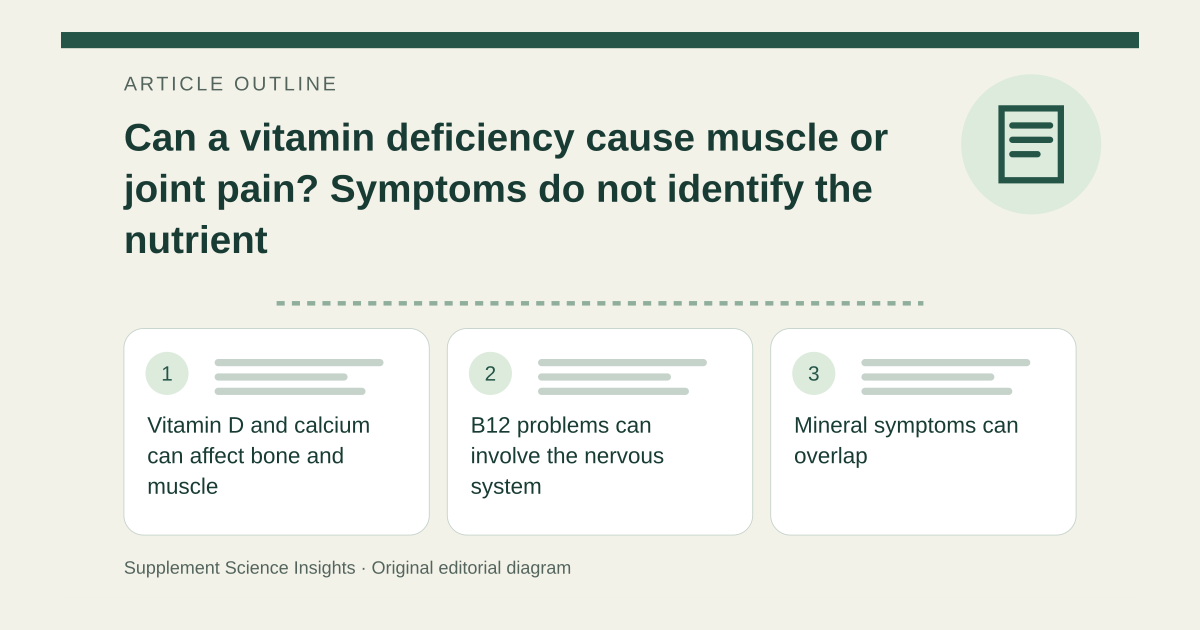
Vitamin D and calcium can affect bone and muscle
NHS describes osteomalacia as a disorder often linked to low vitamin D or calcium. Features can include bone pain, muscle weakness and cramping or twitching. Assessment considers vitamin D and calcium, with other tests when needed; this does not mean every sore joint is osteomalacia. [1]
B12 problems can involve the nervous system
ODS describes neurological changes with B12 deficiency as well as anemia and fatigue. Numbness or tingling deserves assessment rather than assuming it is the same problem as a strained muscle or an inflamed joint. Normal intake and adequate absorption are separate questions. [2]
Mineral symptoms can overlap
Magnesium deficiency can cause weakness, cramps or other neuromuscular changes, especially when illness or losses contribute. These symptoms are not a diagnosis. Taking several high-dose products together can add adverse effects and obscure which problem actually needs treatment. [3]
The location and pattern matter
A hot, swollen joint with fever or feeling unwell needs urgent assessment. Persistent pain affecting activity or sleep also deserves review. Injury, arthritis and other causes should not be overlooked while searching for a single deficiency to explain everything. [4]
Use results to guide replacement
Imagine diffuse discomfort leads someone to take vitamin D, B12 and magnesium without evaluation. Improvement or persistence cannot reliably identify a deficiency. Review the symptom pattern, diet, medicines and appropriate tests, then match any replacement to the finding and follow-up plan. [1][2][3]
| Pattern | Assessment question |
|---|---|
| Bone pain and weakness | Could mineralization or another condition be involved? |
| Numbness or tingling | Is there a neurological or nutritional cause? |
| Hot swollen joint with illness | Does this need urgent care? |
Sources for this article
- Rickets and osteomalacia
- NHS
Source consulted: 2026-09-21. This is a reference resource, not a claim that we conducted the studies or tested a product. - Vitamin B12 - Health Professional Fact Sheet
Source consulted: 2026-09-21. This is a reference resource, not a claim that we conducted the studies or tested a product. - Magnesium - Health Professional Fact Sheet
Source consulted: 2026-09-21. This is a reference resource, not a claim that we conducted the studies or tested a product. - Joint pain - NHS
Source consulted: 2026-09-21. This is a reference resource, not a claim that we conducted the studies or tested a product.