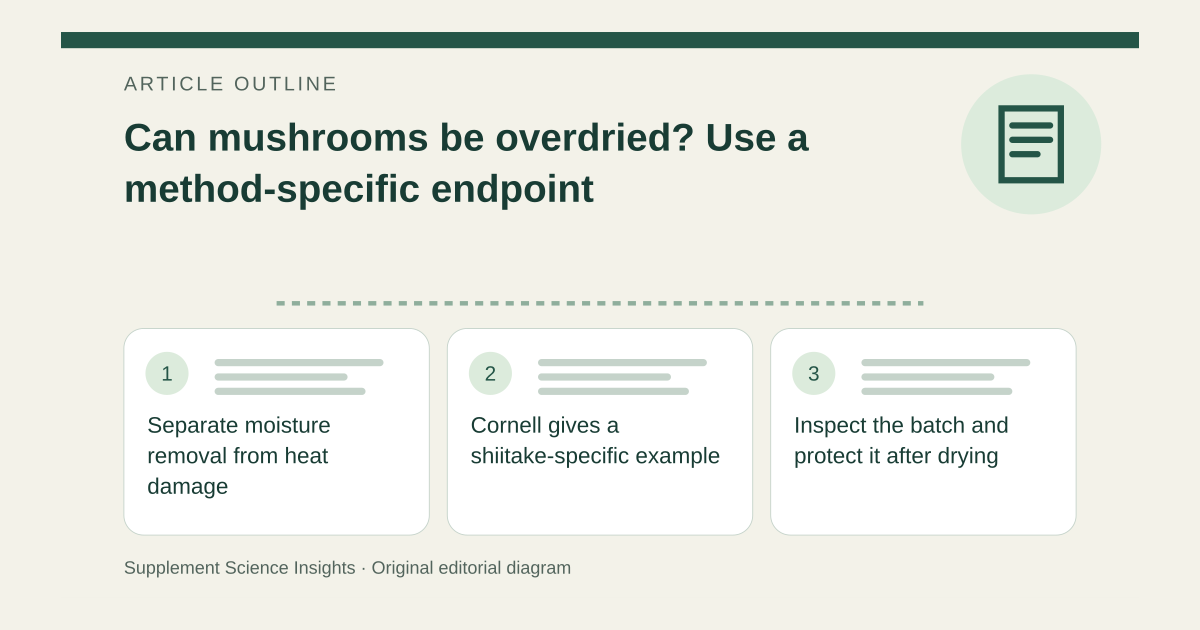
Separate moisture removal from heat damage
The goal of drying is suitable moisture reduction for the intended storage method. Excess heat can damage cooking quality without proving that every thick piece is uniformly dry. Follow a method appropriate to the mushroom and appliance rather than increasing temperature until the surface looks finished. [1]
Cornell gives a shiitake-specific example
Cornell’s small-farm guidance describes dehydrated shiitake as light and dry but slightly flexible rather than brittle, and directs users to follow the dehydrator instructions. This is a species- and method-specific guide. It should not be turned into a universal rule that all dried mushroom products must have one texture or identical moisture content. [1]
Inspect the batch and protect it after drying
Imagine small pieces are dry while thick caps still contain moisture. The batch needs assessment of the larger pieces, not just the first piece that looks ready. Cool as the method directs and store in appropriate sealed packaging away from moisture. Discard moldy material; drying does not restore spoiled mushrooms or make an unidentified wild species safe. [1][2]
| Example | Interpretation |
|---|---|
| One dry thin piece | Does not establish the whole batch endpoint |
| Higher heat | Not an automatic quality improvement |
| Mold or uncertain identity | Not corrected by drying |
Sources for this article
- Storage & Preservation - Cornell Small Farms
Source consulted: 2026-09-20. This is a reference resource, not a claim that we conducted the studies or tested a product. - Preparing and Preserving Mushrooms
Source consulted: 2026-09-20. This is a reference resource, not a claim that we conducted the studies or tested a product.