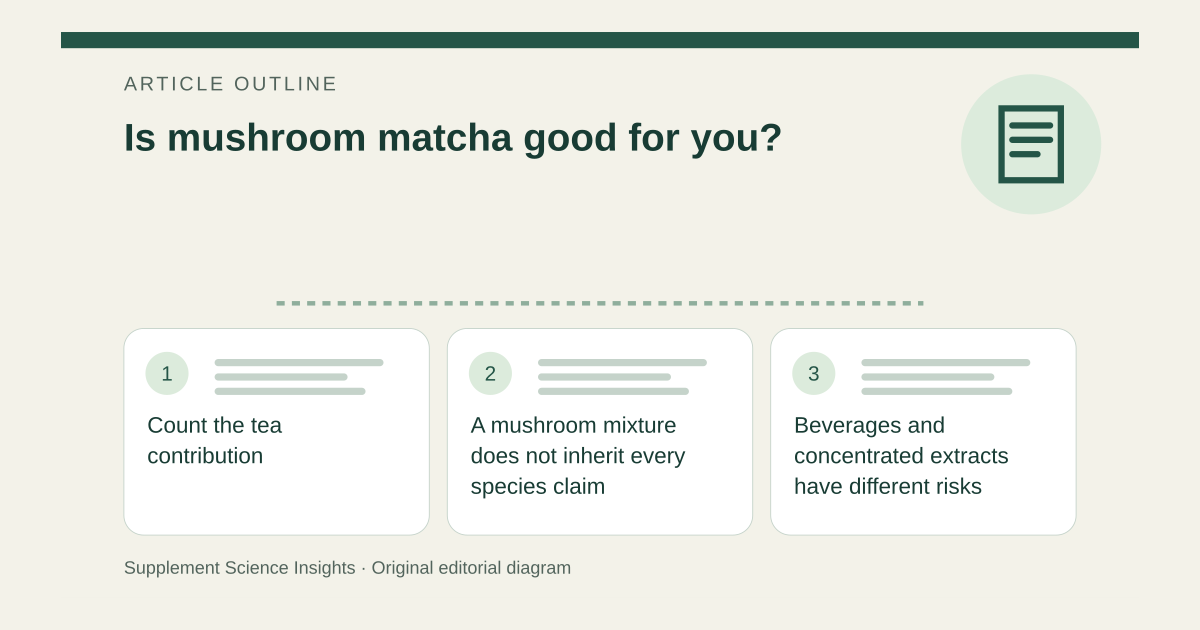
Count the tea contribution
Green tea contains caffeine unless specifically decaffeinated. A stimulating effect after a mushroom-matcha drink may therefore come from tea rather than mushrooms. Serving size and other caffeine sources affect the total intake. [1]
A mushroom mixture does not inherit every species claim
Research using a particular mushroom preparation does not prove the same benefit from a small amount in a beverage. OPSS notes variation among mushroom products and limited evidence for blends. More species are not automatically better. [2]
Beverages and concentrated extracts have different risks
NCCIH distinguishes ordinary green-tea beverages from extract supplements, for which liver injury and other adverse effects have been reported. Green tea can interact with medicines, and mushroom extracts add their own cautions. Pregnancy or medication use warrants product-specific advice. [1][3]
Compare the drink with your real alternative
Imagine a sweetened latte is replaced with an unsweetened mushroom matcha. Lower added sugar may be a useful dietary change, but it does not demonstrate an adaptogenic effect. Choose the beverage on its full composition and tolerability. [1][2]
| Feature | Question |
|---|---|
| Caffeine | How much in the full serving? |
| Mushrooms | Which species and preparations? |
| Sweetener | How much added sugar? |
| Focus claim | Evidence for this combination? |
Sources for this article
- Green Tea: Usefulness and Safety | NCCIH
Source consulted: 2026-09-21. This is a reference resource, not a claim that we conducted the studies or tested a product. - Mushroom Dietary Supplements
Source consulted: 2026-09-21. This is a reference resource, not a claim that we conducted the studies or tested a product. - Reishi Mushroom | Memorial Sloan Kettering Cancer Center
Source consulted: 2026-09-21. This is a reference resource, not a claim that we conducted the studies or tested a product.