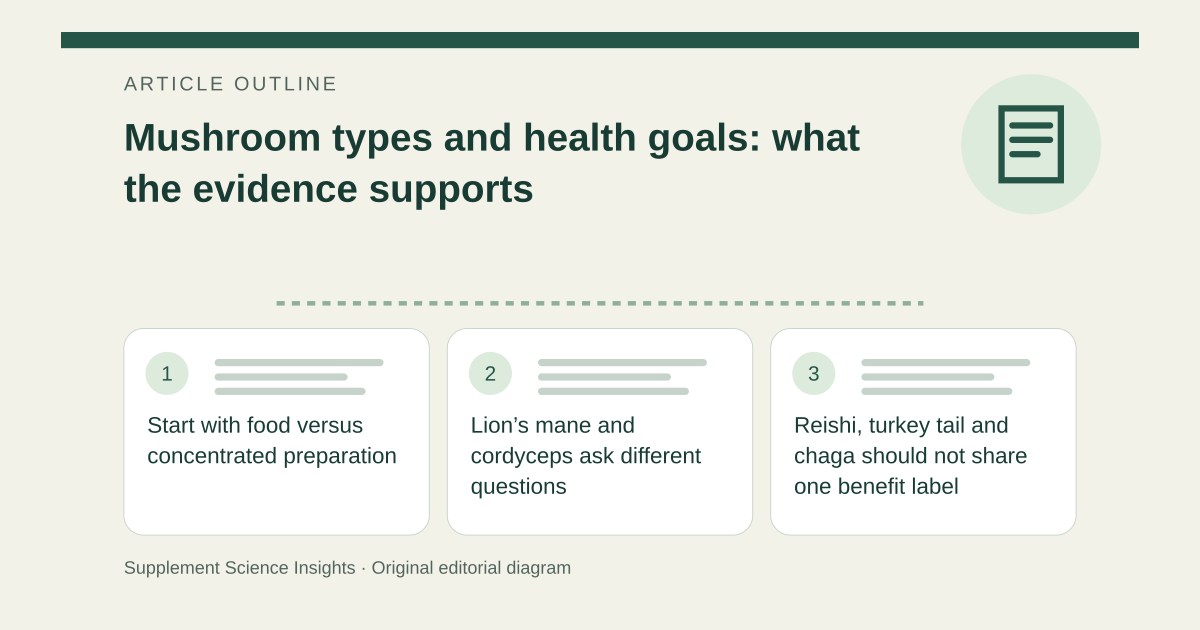
Start with food versus concentrated preparation
Culinary shiitake, button and oyster mushrooms can add nutrients and variety. A dried powder, selected extract or proprietary blend is not automatically nutritionally or pharmacologically equivalent to the food. [1][2]
Lion’s mane and cordyceps ask different questions
Lion’s mane has limited clinical research involving cognition and mood. Cordyceps exercise findings are mixed. Neither is established as an all-purpose energy-and-brain supplement, and the tested preparation matters. [3][4]
Reishi, turkey tail and chaga should not share one benefit label
Reishi has mixed clinical findings and interaction concerns. Turkey-tail-derived PSK has specific adjunctive oncology research that does not validate all retail products. Chaga has largely preclinical benefit claims and important kidney-injury reports. [5][6][7]
Choose an evidence question, not a species leaderboard
Imagine a person compares five products for an unspecified immunity goal. More species or a higher total weight cannot establish fewer infections or better health. Define the outcome, check the actual preparation and decide whether the evidence warrants any supplement. [2][8]
| Type | Evidence boundary |
|---|---|
| Culinary mushrooms | Food nutrition and variety |
| Lion’s mane | Limited cognition/mood trials |
| Cordyceps | Mixed exercise findings |
| Reishi | Mixed results and interactions |
| Turkey tail PSK | Specific adjunctive research |
| Chaga | Human efficacy unestablished; kidney concerns |
Sources for this article
- Fruit and Vegetable Guide Series: Mushrooms | USU
Source consulted: 2026-09-21. This is a reference resource, not a claim that we conducted the studies or tested a product. - Mushroom Dietary Supplements
Source consulted: 2026-09-21. This is a reference resource, not a claim that we conducted the studies or tested a product. - Lion's Mane Mushroom | Memorial Sloan Kettering Cancer Center
Source consulted: 2026-09-21. This is a reference resource, not a claim that we conducted the studies or tested a product. - Cordyceps | Memorial Sloan Kettering Cancer Center
Source consulted: 2026-09-21. This is a reference resource, not a claim that we conducted the studies or tested a product. - Reishi Mushroom | Memorial Sloan Kettering Cancer Center
Source consulted: 2026-09-21. This is a reference resource, not a claim that we conducted the studies or tested a product. - Mushrooms - NCI
Source consulted: 2026-09-21. This is a reference resource, not a claim that we conducted the studies or tested a product. - Chaga Mushroom | Memorial Sloan Kettering Cancer Center
Source consulted: 2026-09-21. This is a reference resource, not a claim that we conducted the studies or tested a product. - Dietary Supplements: What You Need to Know
Source consulted: 2026-09-21. This is a reference resource, not a claim that we conducted the studies or tested a product.