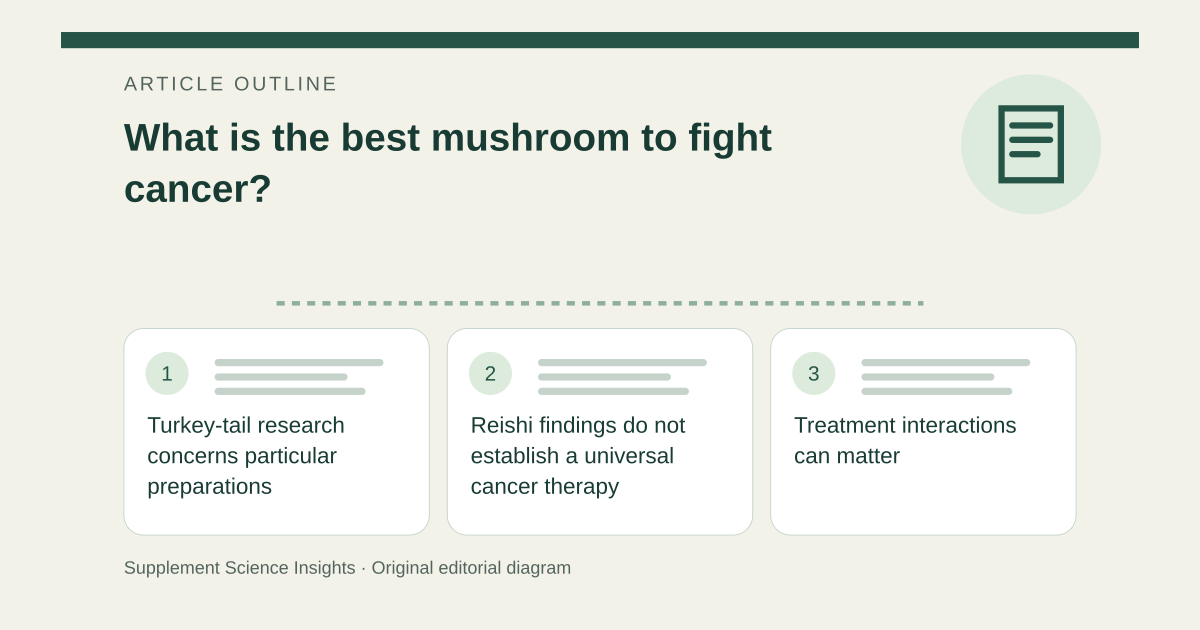
Turkey-tail research concerns particular preparations
NCI describes PSK studies in specific cancers, often as an addition to surgery, chemotherapy or radiation. A purified or standardized preparation used in those studies is not automatically equivalent to a supermarket mushroom, tea or retail capsule. [1]
Reishi findings do not establish a universal cancer therapy
Laboratory immune and tumor-cell effects are different from clinical outcomes. NCI and MSK discuss limited adjunctive research, not a basis for replacing standard treatment or selecting reishi for every cancer diagnosis. [1][2]
Treatment interactions can matter
Mushroom supplements may affect bleeding risk, immune activity or laboratory measurements. Reishi spore products can interfere with interpretation of the tumor marker CA72-4. The oncology team needs the exact product and dose history. [2]
Ask a diagnosis-specific question
Imagine a person receiving chemotherapy considers a blend because it killed cancer cells in a laboratory. Ask whether the actual preparation has clinical evidence in that cancer and whether it is compatible with treatment. A decision not to add it can be appropriate. [1][3]
| Evidence | Cannot automatically establish |
|---|---|
| Tumor cells in a dish | Benefit in a person |
| PSK adjunct trial | All turkey-tail products equivalent |
| Immune-marker change | Longer survival |
| Multi-mushroom blend | Compatibility with oncology care |
Sources for this article
- Mushrooms - NCI
Source consulted: 2026-09-21. This is a reference resource, not a claim that we conducted the studies or tested a product. - Reishi Mushroom | Memorial Sloan Kettering Cancer Center
Source consulted: 2026-09-21. This is a reference resource, not a claim that we conducted the studies or tested a product. - Dietary Supplements: What You Need to Know
Source consulted: 2026-09-21. This is a reference resource, not a claim that we conducted the studies or tested a product.