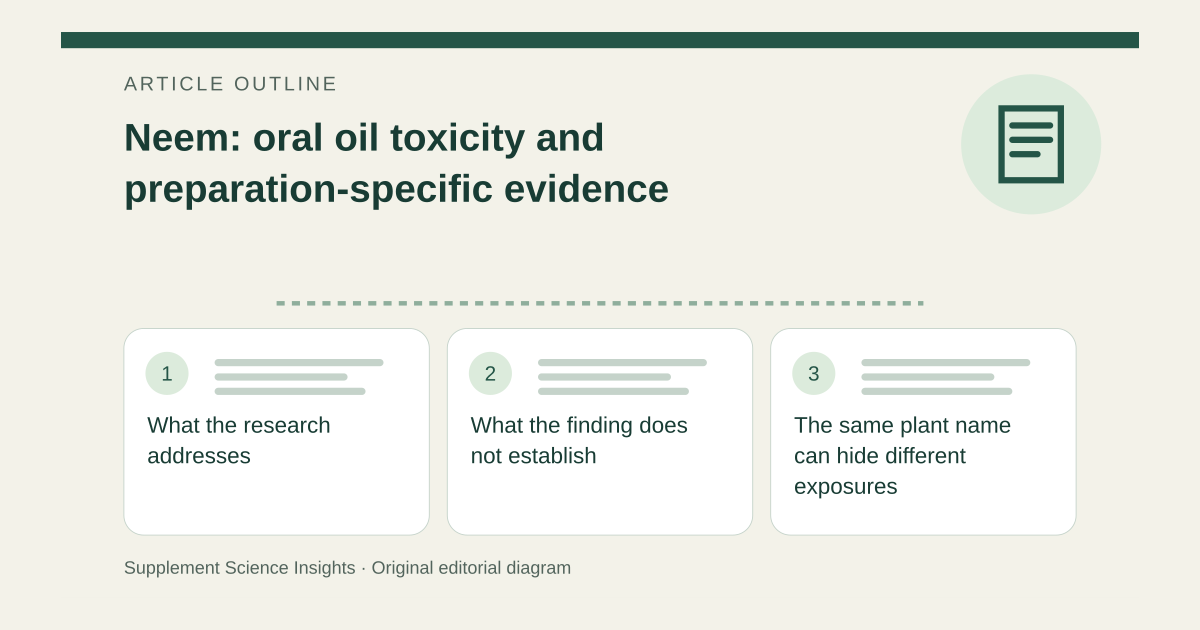
What the research addresses
Neem is a tree whose leaves, bark and seeds appear in different traditional and commercial preparations. MSK describes some research on oral hygiene and other uses, but findings are not uniform. Human evidence does not establish neem as a cancer treatment. [1]
What the finding does not establish
An effect from a mouthwash or topical product cannot demonstrate that swallowing neem oil is helpful or safe. Plant part and route are central to the question, not minor labeling details. [1]
The same plant name can hide different exposures
Imagine someone reads a favorable mouthwash study and buys a bottle of oil for oral use. The proposed step changes the preparation and the exposure route. The study would need to address those changes directly; otherwise it cannot support the decision.
A useful evidence summary writes out what participants actually used and how they used it. “Neem helped” leaves out the information most necessary to avoid a false comparison. This matters even more when an ingredient has both topical uses and reports of serious poisoning after ingestion.
| Hypothetical finding or choice | What it means |
|---|---|
| A studied mouthwash | Evidence for that preparation and use |
| A bottle of neem oil | A different exposure with serious ingestion risks |
| A general neem claim | Missing plant-part and route details |
Safety and treatment considerations
Ingesting neem oil has caused severe poisoning in adults and children, including seizures, coma and deaths. Do not swallow neem oil as a home remedy. Topical preparations can cause dermatitis; possible drug-metabolism effects of extracts remain clinically uncertain. [1]
A practical next step
This article does not recommend a neem product or supply an ingestion recipe. Its most useful takeaway is to keep topical or oral-hygiene research separate from unsupported oral-oil use and to discuss any proposed extract with a clinician.
Sources for this article
- Memorial Sloan Kettering Cancer Center — Neem
Source consulted: 2026-09-17. This is a reference resource, not a claim that we conducted the studies or tested a product.