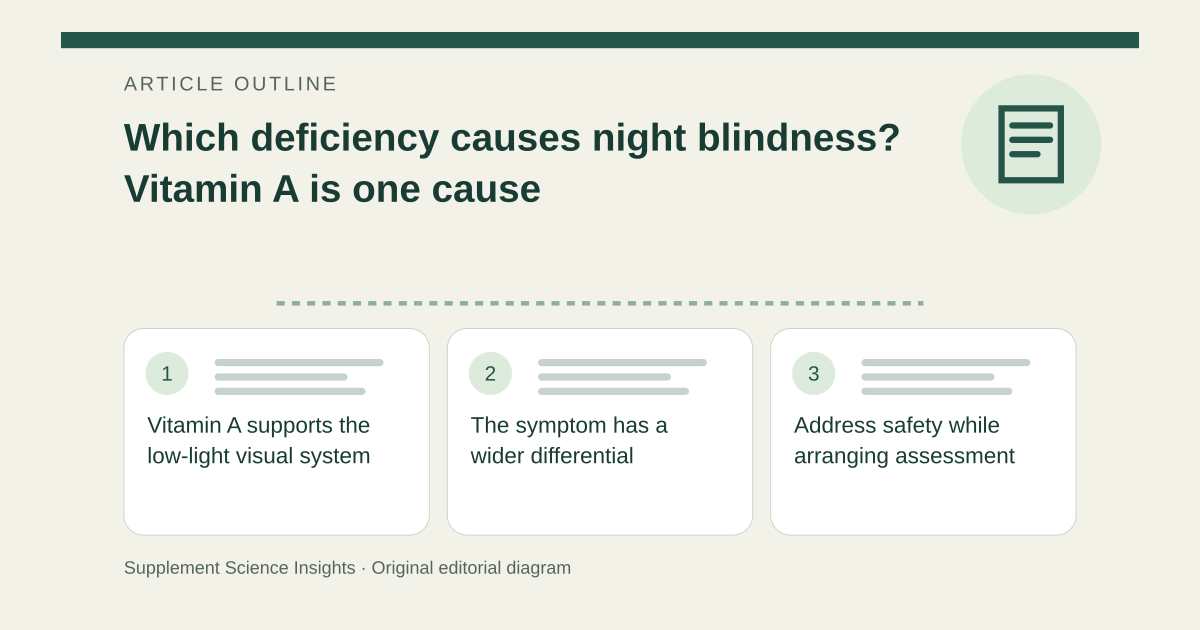
Vitamin A supports the low-light visual system
ODS identifies night blindness as an early eye manifestation of vitamin A deficiency, associated with inadequate retinal visual pigment. More advanced deficiency can damage the eye. This is a genuine deficiency effect, not evidence that extra vitamin A improves normal night vision. [1]
The symptom has a wider differential
MedlinePlus lists cataracts, nearsightedness, some medicines and inherited retinal conditions among other explanations. An eye examination is needed to distinguish them. A vitamin cannot be assumed to correct a lens or inherited retinal problem. [2]
Address safety while arranging assessment
Avoid night driving when vision is impaired unless your eye clinician approves it. Imagine increasing vitamin A while continuing unsafe night driving: neither the diagnosis nor the immediate risk is addressed. High-dose preformed vitamin A can be harmful, so deficiency treatment should be directed by the clinical findings. [2][1]
| Situation | Useful distinction |
|---|---|
| Vitamin A deficiency | One recognized cause |
| Cataract or retinal condition | Different explanation |
| Impaired night driving | Requires immediate practical caution |
Sources for this article
- Vitamin A and Carotenoids - Health Professional Fact Sheet
Source consulted: 2026-09-20. This is a reference resource, not a claim that we conducted the studies or tested a product. - Vision - night blindness: MedlinePlus Medical Encyclopedia
Source consulted: 2026-09-20. This is a reference resource, not a claim that we conducted the studies or tested a product.