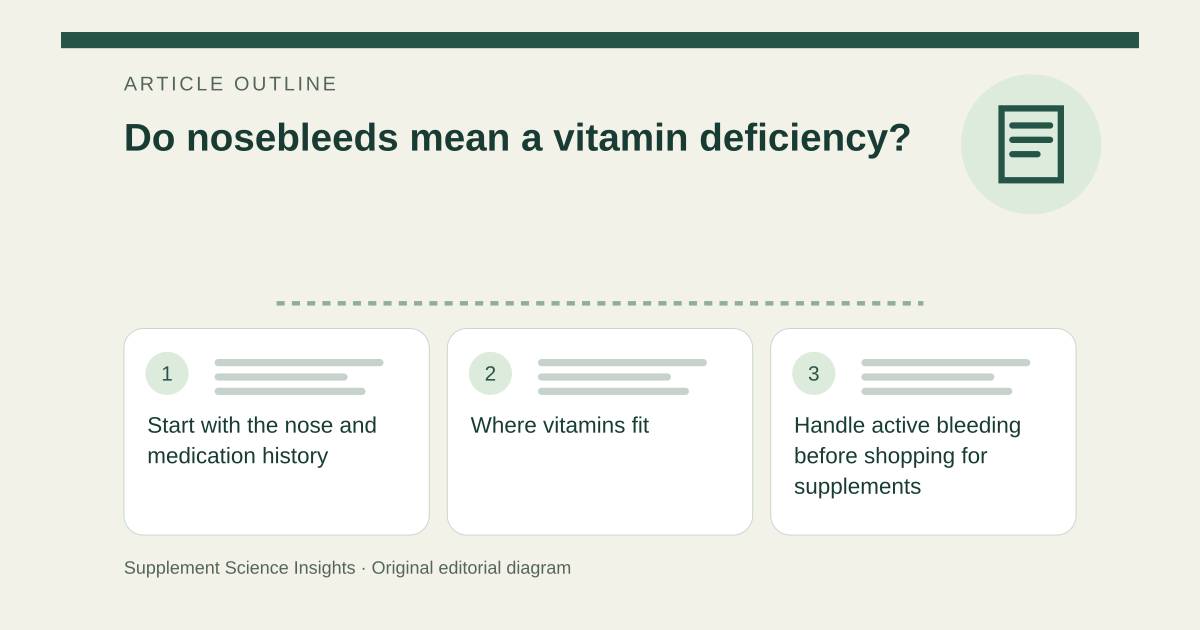
Start with the nose and medication history
MedlinePlus lists dry air, colds, allergies, picking or forceful blowing among common contributors. Blood-thinning medicines can worsen bleeding. Recurrent episodes warrant assessment rather than automatically adding a vitamin. Do not stop a prescribed medicine on your own. [1]
Where vitamins fit
Severe vitamin K deficiency impairs clotting, but clinically important deficiency is very rare in adults and is more likely with absorption problems or interfering medicines. Severe vitamin C deficiency weakens connective tissue and can cause abnormal bleeding. Those mechanisms do not establish either deficiency as the cause of an isolated nosebleed. [2][3]
Handle active bleeding before shopping for supplements
For an ordinary nosebleed, sit upright, lean forward and pinch the soft nose continuously for ten minutes. Seek emergency care if bleeding continues after twenty minutes, follows a head injury, or occurs while taking blood thinners, as MedlinePlus advises. Imagine repeated winter nosebleeds: nasal irritation and the full history need review, not a presumed vitamin diagnosis. [1]
| Observation | Interpretation |
|---|---|
| One episode in dry air | Not a vitamin test |
| Repeated episodes | Review local and systemic causes |
| Persistent active bleeding | Needs urgent care |
Sources for this article
- Nosebleed : MedlinePlus Medical Encyclopedia
Source consulted: 2026-09-20. This is a reference resource, not a claim that we conducted the studies or tested a product. - Vitamin K - Health Professional Fact Sheet
Source consulted: 2026-09-20. This is a reference resource, not a claim that we conducted the studies or tested a product. - Vitamin C - Health Professional Fact Sheet
Source consulted: 2026-09-20. This is a reference resource, not a claim that we conducted the studies or tested a product.