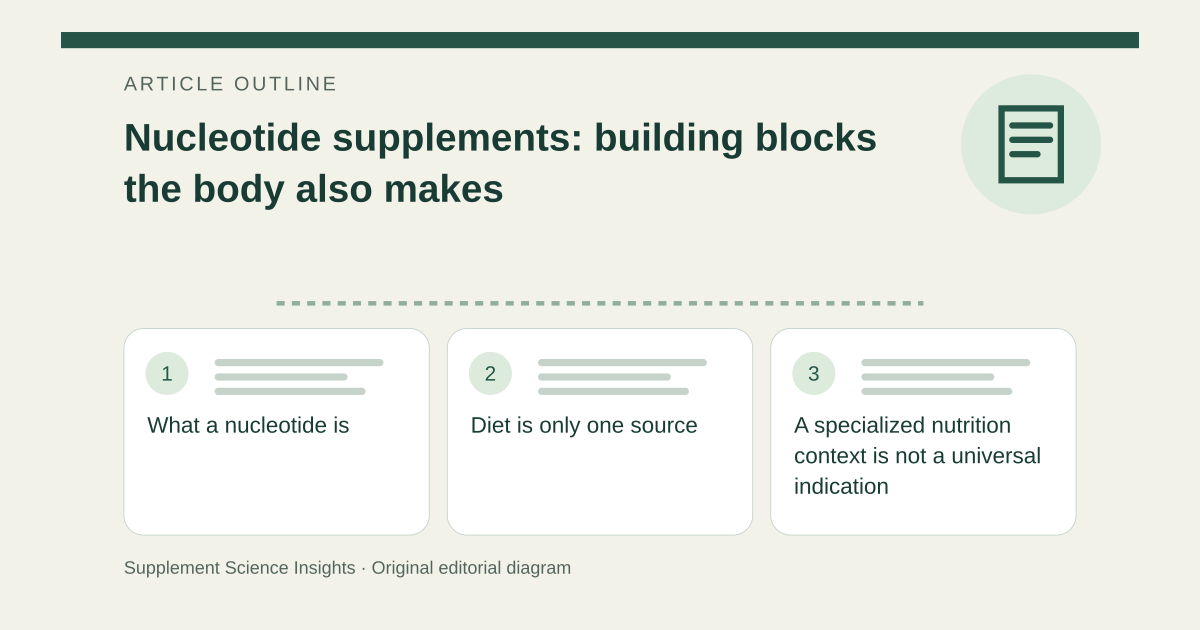
What a nucleotide is
NHGRI defines a nucleotide as a sugar joined to a phosphate group and a nitrogen-containing base. DNA and RNA contain chains of these units. Nucleotides therefore differ from amino acids, which are used to construct proteins. [1][2]
Diet is only one source
Cells can make nucleotides from other metabolic ingredients and recycle components after nucleic acids break down. Dietary sources are another route. The textbook explanation supports this supply distinction; it does not show that extra capsules improve immunity, recovery or longevity in otherwise adequately nourished adults. [3]
A specialized nutrition context is not a universal indication
Imagine seeing nucleotides in both a formulated nutrition product and an adult supplement. That shared category does not establish matching ingredients, amounts, populations or benefits. Ask which nucleotide is supplied and what human outcome supports using that dose. Do not add supplements to infant feeds without the child’s clinician directing it. [4]
| Question | Distinction |
|---|---|
| DNA/RNA building block | Normal cellular role |
| Synthesis and recycling | Supply is not exclusively dietary |
| Specialized formula ingredient | Not a blanket adult recommendation |
Sources for this article
- Nucleotide
Source consulted: 2026-09-20. This is a reference resource, not a claim that we conducted the studies or tested a product. - Amino acids: MedlinePlus Medical Encyclopedia
Source consulted: 2026-09-20. This is a reference resource, not a claim that we conducted the studies or tested a product. - The Biosynthesis of Cell Constituents — The Cell
Source consulted: 2026-09-20. This is a reference resource, not a claim that we conducted the studies or tested a product. - Dietary Supplements: What You Need to Know
Source consulted: 2026-09-20. This is a reference resource, not a claim that we conducted the studies or tested a product.