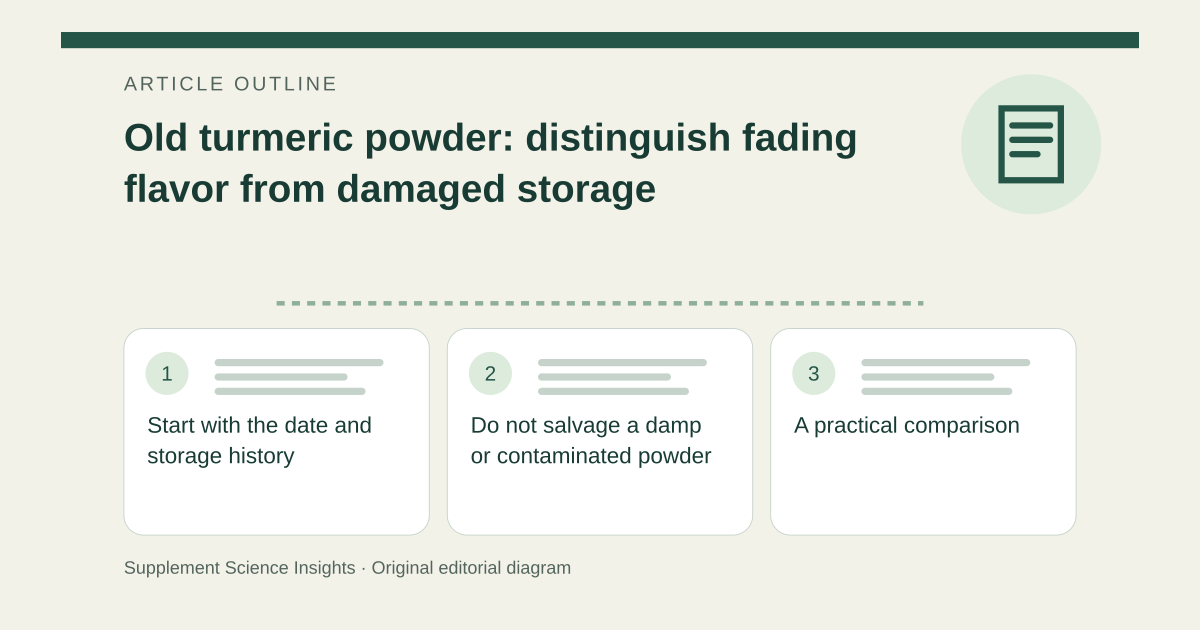
Start with the date and storage history
Read what the package date actually means and follow any specific manufacturer instructions. University extension guidance describes gradual flavor loss in dried spices. A date alone does not measure current potency, and an aroma check cannot certify microbial safety. Consider how the container has been stored and handled. [1]
Do not salvage a damp or contaminated powder
USU Extension explains that moisture entering dried foods can permit microbial growth. Discard turmeric with visible mold, pests, water damage or a concerning storage history rather than drying it again for food use. Do not move a questionable food powder into a homemade skin treatment as a presumed safe way to use it up. [2]
A practical comparison
Imagine one tightly closed jar is dry but less aromatic, while another has been wet near the stove. The first raises a quality question; the second raises a contamination concern. For future purchases, choose quantities you use readily, keep the jar closed in a cool dark place and measure away from rising cooking steam. [1]
| Hypothetical observation | Decision context |
|---|---|
| Dry, intact, faded aroma | Quality may have declined |
| Water damage or mold | Discard; do not taste-test |
| Steam entering open jar | Change storage and measuring habits |
Sources for this article
- Storing Herbs and Spices — UC Cooperative Extension
Source consulted: 2026-09-20. This is a reference resource, not a claim that we conducted the studies or tested a product. - Food Storage Conditions — Utah State University Extension
Source consulted: 2026-09-20. This is a reference resource, not a claim that we conducted the studies or tested a product.