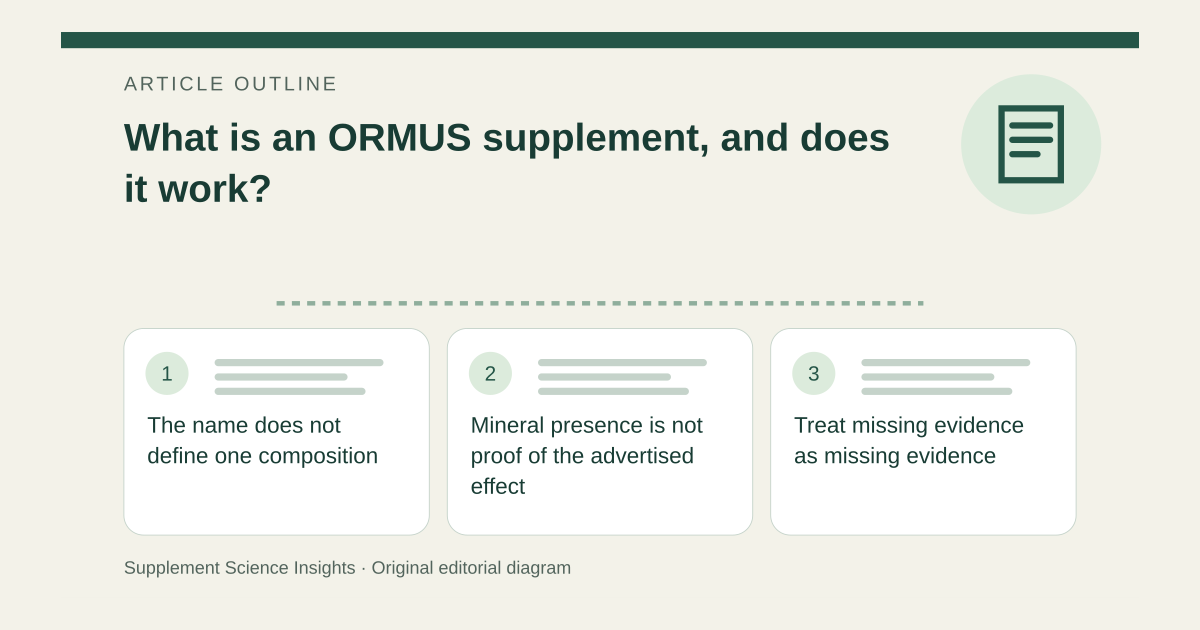
The name does not define one composition
A seller’s own overview describes products made from different mineral sources and acknowledges variation between makers. It presents the special-state explanation as a speculative idea. This source helps identify the marketing language; it is not independent confirmation that the proposed chemistry or health effects are established. [1]
Mineral presence is not proof of the advertised effect
A mineral analysis could identify measured constituents without validating claims about consciousness, rejuvenation or superconductivity. FDA’s supplement framework requires attention to the actual ingredients and claims; selling a product does not mean FDA has approved its effectiveness. No reliable benefit can be assigned to the category name alone. [2]
Treat missing evidence as missing evidence
Imagine a bottle promises clarity but offers testimonials rather than a controlled trial of its exact formula. That leaves the benefit unverified. Request composition and contaminant testing, but recognize that quality testing still does not demonstrate efficacy. Avoid using an undefined mineral mixture to treat illness or replace a known nutritional need. [2][3]
| Claim | What it establishes |
|---|---|
| Mechanism or product name | A question to investigate |
| Matching human outcome | Evidence needed for a benefit claim |
| Individual suitability | Requires the actual formulation and context |
Sources for this article
- What Is Ormus Monoatomic Gold? Guide – Ormusminerals
Source consulted: 2026-09-21. This is a reference resource, not a claim that we conducted the studies or tested a product. - Questions and Answers on Dietary Supplements | FDA
Source consulted: 2026-09-21. This is a reference resource, not a claim that we conducted the studies or tested a product. - Dietary Supplements: What You Need to Know - Consumer
Source consulted: 2026-09-21. This is a reference resource, not a claim that we conducted the studies or tested a product.