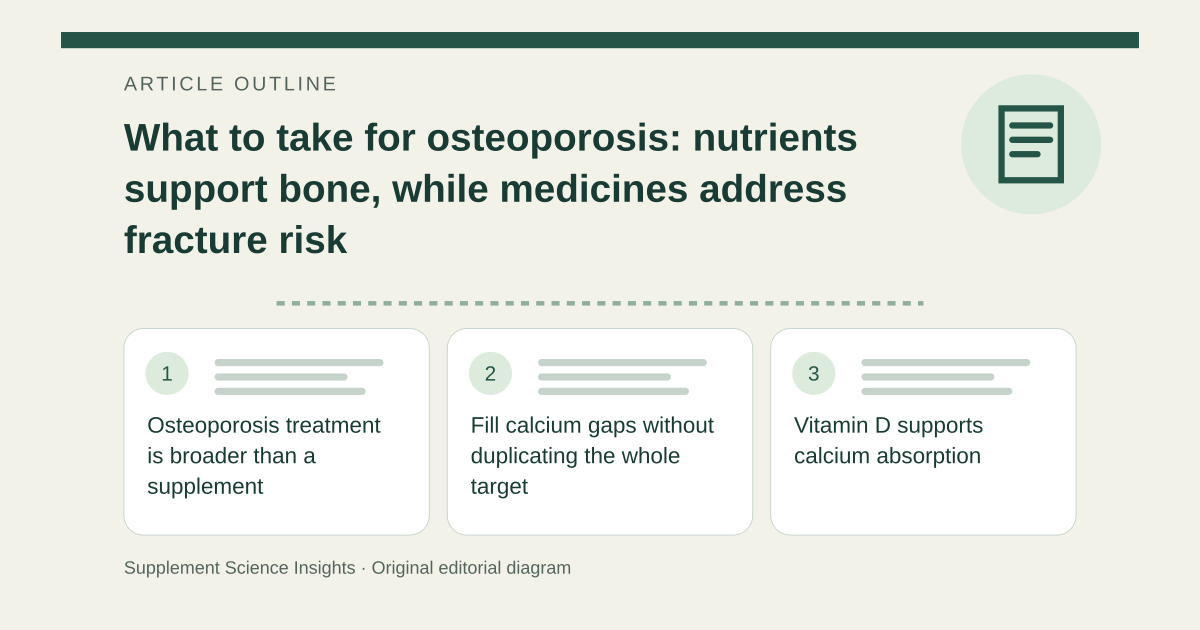
Osteoporosis treatment is broader than a supplement
NIAMS describes nutrition, activity and medicines as parts of management. The goal includes preventing fractures, not merely increasing a nutrient level. A bone-support label does not establish that a product reduces fracture risk. [1]
Fill calcium gaps without duplicating the whole target
Calcium can come from food and supplements. Count the existing diet and all products before adding more; a supplement is often used to fill a gap rather than provide the entire daily amount on top of food. Needs and appropriate amounts vary with age and circumstances. [2]
Vitamin D supports calcium absorption
Vitamin D is important for bone health, but high doses are not automatically better. Use the clinician’s plan for a documented deficiency and review duplicate products. The upper intake level is not a routine target. [3]
Prescription options work differently from nutrients
NIAMS describes medicines that slow bone loss and other treatments selected according to risk and patient factors. Bisphosphonates, for example, can reduce fracture risk by slowing bone loss. Treatment choice and duration require medical review rather than a generic strongest-bone-supplement ranking. [1]
Consider the full fracture-prevention plan
Imagine someone with osteoporosis already meets calcium needs but has a prior fragility fracture. Adding another calcium bottle does not answer whether prescription treatment and other protective measures are needed. Review the full risk profile and nutrition together. [1][2]
| Goal or finding | Meaning |
|---|---|
| Dietary calcium gap | May justify a targeted supplement |
| Documented vitamin D deficiency | Needs an appropriate replacement plan |
| Established osteoporosis | Assess fracture risk and medicines |
Sources for this article
- Osteoporosis: Diagnosis, Treatment, and Steps to Take
Source consulted: 2026-09-20. This is a reference resource, not a claim that we conducted the studies or tested a product. - Calcium - Health Professional Fact Sheet
Source consulted: 2026-09-20. This is a reference resource, not a claim that we conducted the studies or tested a product. - Vitamin D - Health Professional Fact Sheet
Source consulted: 2026-09-20. This is a reference resource, not a claim that we conducted the studies or tested a product.