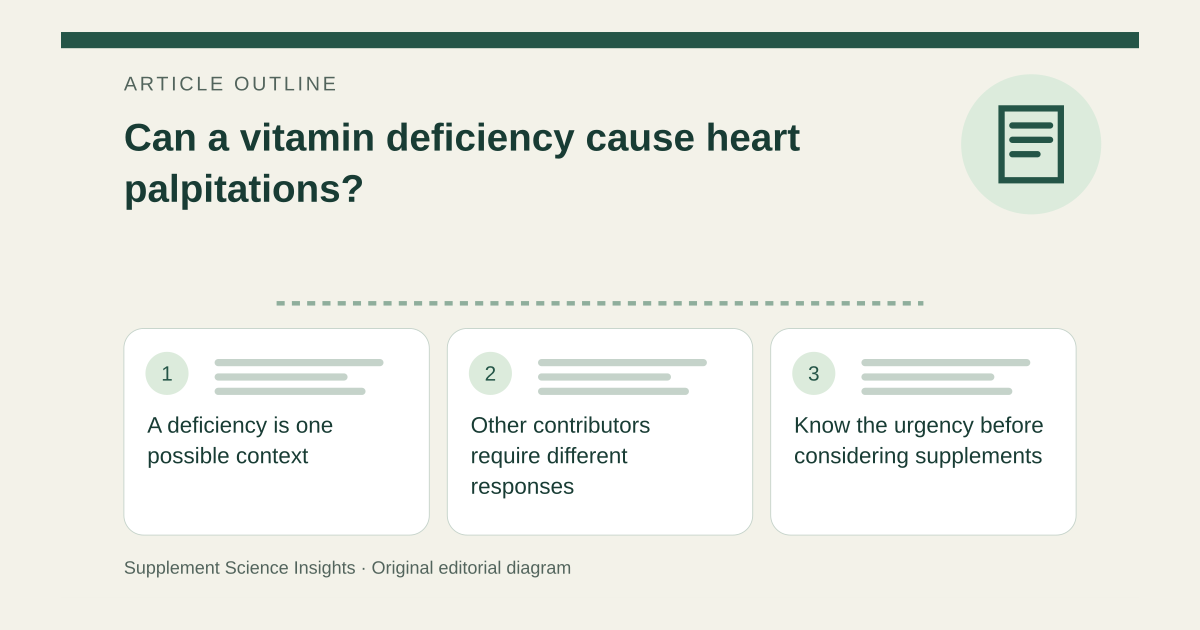
A deficiency is one possible context
ODS includes palpitations among possible effects of B12 deficiency, which can also cause anemia. That does not establish B12 as the cause of a particular episode. A normal-feeling or abnormal rhythm can both be described as palpitations. [1][2]
Other contributors require different responses
MedlinePlus lists stress, stimulants, some medicines, thyroid disease and abnormal heart rhythms among possibilities. Electrolyte abnormalities can also matter. Magnesium and potassium are minerals, and taking them without knowing the cause is not a substitute for rhythm assessment. [2]
Know the urgency before considering supplements
Get emergency help for palpitations with chest pain, breathlessness, fainting or marked lightheadedness. Arrange review for new or different palpitations. Imagine someone assumes a pounding heartbeat is low B12: the priority is assessing the episode, with nutrient testing only as appropriate. [2]
| Situation | Useful distinction |
|---|---|
| Confirmed B12 deficiency | A treatable nutritional problem |
| New palpitations | Needs clinical assessment |
| Chest pain or fainting | Emergency help |
Sources for this article
- Vitamin B12 - Health Professional Fact Sheet
Source consulted: 2026-09-20. This is a reference resource, not a claim that we conducted the studies or tested a product. - Heart palpitations: MedlinePlus Medical Encyclopedia
Source consulted: 2026-09-20. This is a reference resource, not a claim that we conducted the studies or tested a product.