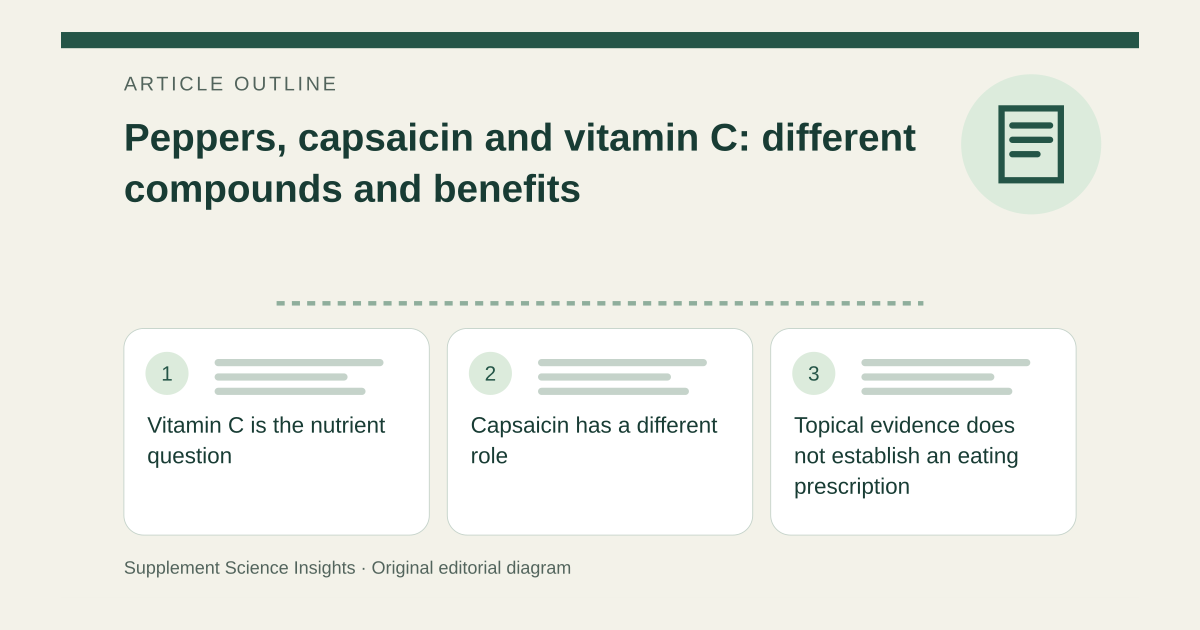
Vitamin C is the nutrient question
NIH lists red and green peppers among vitamin C sources. The nutrient supports collagen formation and normal antioxidant functions. Content depends on the food and preparation; a heat rating is not a measure of vitamin C, so choose foods by composition and serving rather than pungency. [1]
Capsaicin has a different role
MedlinePlus identifies capsaicin as a substance in chili peppers that affects pain-related nerve cells in the skin when used in topical medicines. This is distinct from vitamin C nutrition. The fact that both occur in discussions of peppers does not make their mechanisms or doses interchangeable. [2]
Topical evidence does not establish an eating prescription
NCCIH describes evidence for certain topical cayenne products in pain care. That cannot be converted into a number of peppers to eat for the same result. Likewise, a food-level antioxidant claim does not establish treatment of cancer, diabetes or chronic pain. [3][1]
Keep food and medicine use separate
Imagine someone rubs crushed chili on a painful joint after reading about capsaicin cream. That does not reproduce a formulated medicine and can irritate skin or eyes. Use approved product directions for topical capsaicin, and enjoy peppers as foods according to tolerance. [2]
| Feature | What it describes |
|---|---|
| Vitamin C content | Nutritional composition |
| Pungency | Not a vitamin measurement |
| Topical capsaicin treatment | Specified formulation and route |
| Eating peppers | Not equivalent to a topical medicine |
Sources for this article
- Vitamin C - Health Professional Fact Sheet
Source consulted: 2026-09-21. This is a reference resource, not a claim that we conducted the studies or tested a product. - Capsaicin Topical: MedlinePlus Drug Information
Source consulted: 2026-09-21. This is a reference resource, not a claim that we conducted the studies or tested a product. - Chronic Pain and Complementary Health Approaches: Usefulness and Safety | NCCIH
Source consulted: 2026-09-21. This is a reference resource, not a claim that we conducted the studies or tested a product.