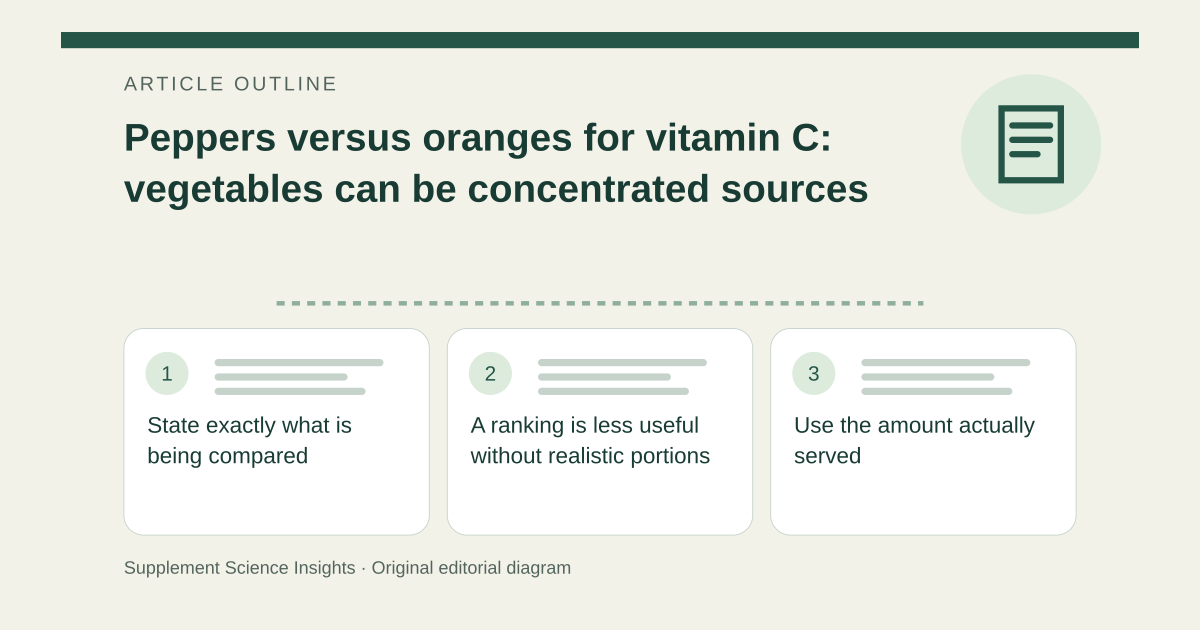
State exactly what is being compared
The representative amounts are 95 mg for half a cup of raw sweet red pepper, 60 mg for half a cup of raw sweet green pepper and 70 mg for a medium orange. These are serving-based comparisons, not equal-weight rankings. [1]
Sweet peppers should not be conflated with a quantified capsaicin exposure. A food’s vitamin C content does not establish the effects of a concentrated pepper extract or a claim about spicy ingredients. [1]
A ranking is less useful without realistic portions
A person may eat different portions of peppers, broccoli or fruit. ODS lists several vegetables as meaningful vitamin C sources, including cooked broccoli and Brussels sprouts. A varied pattern can contribute without identifying one universal winner. [1]
Preparation and storage affect vitamin C, so preserve whether a value describes raw or cooked food. Do not infer nutrient loss from two table rows that differ in portion density or water content. [1]
Use the amount actually served
Imagine a meal contains a quarter cup of raw red pepper. Using the representative half-cup value, that contributes about 47.5 mg. Quoting the full 95 mg would double the estimated contribution.
| Detail | Interpretation |
|---|---|
| Half cup raw red pepper | About 95 mg |
| Medium orange | About 70 mg |
| Quarter cup raw red pepper | About 47.5 mg |
Sources for this article
- Vitamin C - Health Professional Fact Sheet
Source consulted: 2026-09-17. This is a reference resource, not a claim that we conducted the studies or tested a product.