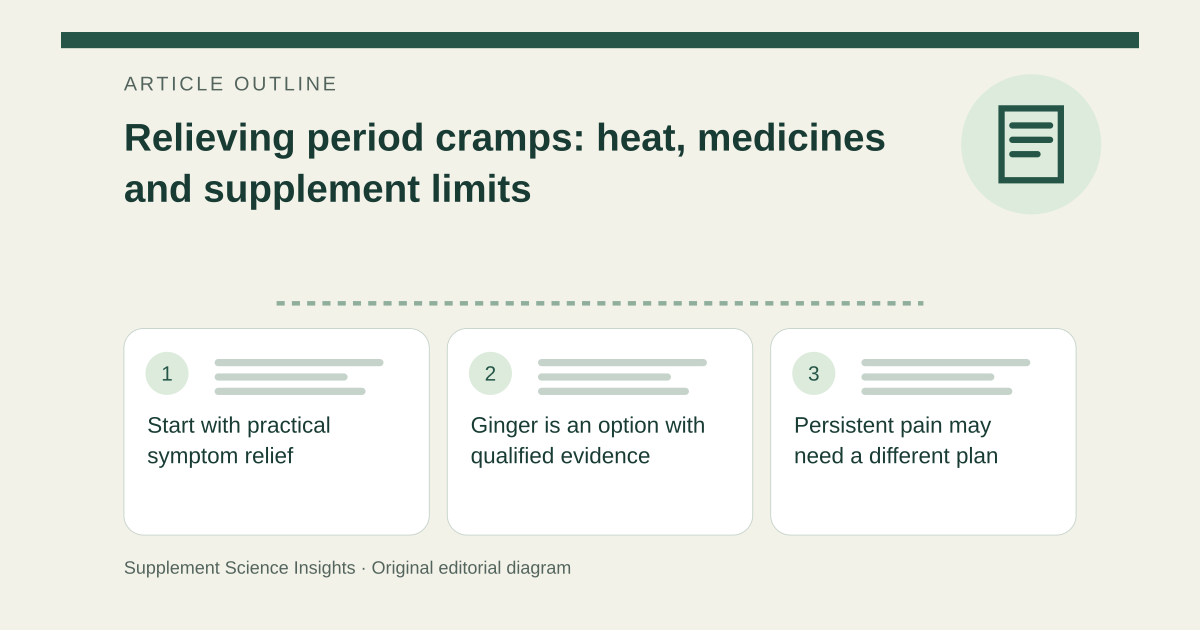
Start with practical symptom relief
NHS suggests a warm bath or shower, gentle activity, massage and a heat pad or wrapped hot-water bottle. Appropriate pain medicines can help when safe for the individual. Avoid placing an unprotected hot surface directly on skin. [1]
Ginger is an option with qualified evidence
NCCIH says ginger supplements might reduce menstrual-cramp severity. This does not establish that every tea, shot or gummy provides the studied effect. Gastrointestinal side effects and interactions remain relevant, so review a concentrated product alongside medicines. [2]
Persistent pain may need a different plan
Pain can relate to endometriosis, adenomyosis, fibroids or pelvic infection. NHS advises review when periods become more painful, heavy or irregular, or when pain affects daily activities. Severe pain that is worse than usual and not helped by painkillers needs urgent advice. [1]
Track the pattern instead of escalating supplements
Imagine cramps are now accompanied by bleeding between periods. Record the timing and seek assessment rather than simply doubling a ginger capsule. A clinician may consider anti-inflammatory treatment, hormonal contraception or investigation according to the cause. [1]
| Option or finding | Practical implication |
|---|---|
| Usual mild cramps | Heat and suitable symptom relief |
| Ginger supplement | Possible benefit; preparation and safety matter |
| New bleeding or worsening pain | Assess the cause |
Sources for this article
- Period pain - NHS
Source consulted: 2026-09-20. This is a reference resource, not a claim that we conducted the studies or tested a product. - Ginger: Usefulness and Safety | NCCIH
Source consulted: 2026-09-20. This is a reference resource, not a claim that we conducted the studies or tested a product.