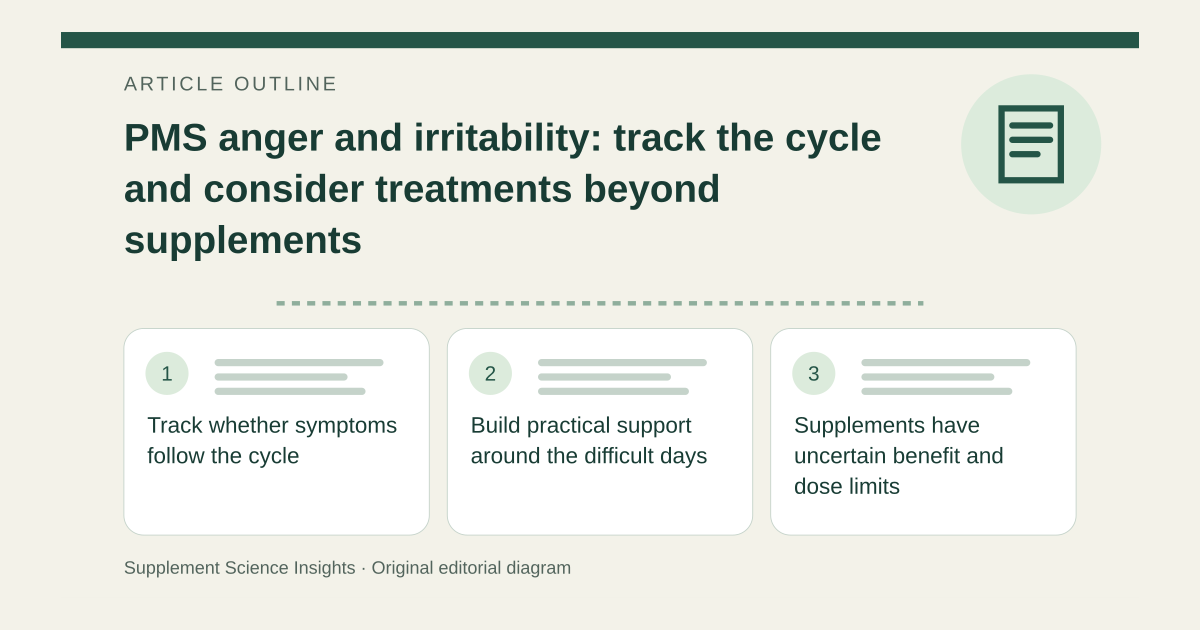
Track whether symptoms follow the cycle
NHS guidance recommends recording symptoms over at least two menstrual cycles. Note timing, severity and impact on relationships, work and sleep. A clear pattern helps distinguish PMS from symptoms that need another explanation. [1]
Build practical support around the difficult days
Regular activity, adequate sleep, balanced eating and stress-management approaches may help. Plan support and ways to step away from escalating conflict without assuming that anger reflects a simple nutrient deficiency. [1]
Supplements have uncertain benefit and dose limits
NHS lists calcium, vitamin D, magnesium and B6 among products sometimes used, while noting limited evidence. Extra B6 is not harmless: excessive intake can injure nerves. Review all products and medicines before starting a regular regimen. [1][2]
Severe symptoms deserve effective care
Clinical options may include cognitive behavioral therapy, antidepressants or hormonal treatment depending on the situation. More intense, disabling symptoms may represent PMDD. If you feel unable to stay safe or have suicidal intent, seek immediate emergency help rather than waiting for a supplement. [1]
Review the pattern and function, not just one bad day
Imagine irritability repeatedly peaks before bleeding and then improves. Bring the diary to a clinician and discuss a plan with a review point. If symptoms occur throughout the month, report that too rather than assuming all distress is PMS. [1][3]
| Situation | Relevant next step |
|---|---|
| Recurring premenstrual pattern | Record timing and impact |
| Daily life disrupted | Discuss clinical treatment |
| Immediate risk of self-harm | Emergency help |
Sources for this article
- PMS (premenstrual syndrome) - NHS
Source consulted: 2026-09-20. This is a reference resource, not a claim that we conducted the studies or tested a product. - Vitamin B6 - Health Professional Fact Sheet
Source consulted: 2026-09-20. This is a reference resource, not a claim that we conducted the studies or tested a product. - Dietary Supplements: What You Need to Know
Source consulted: 2026-09-20. This is a reference resource, not a claim that we conducted the studies or tested a product.