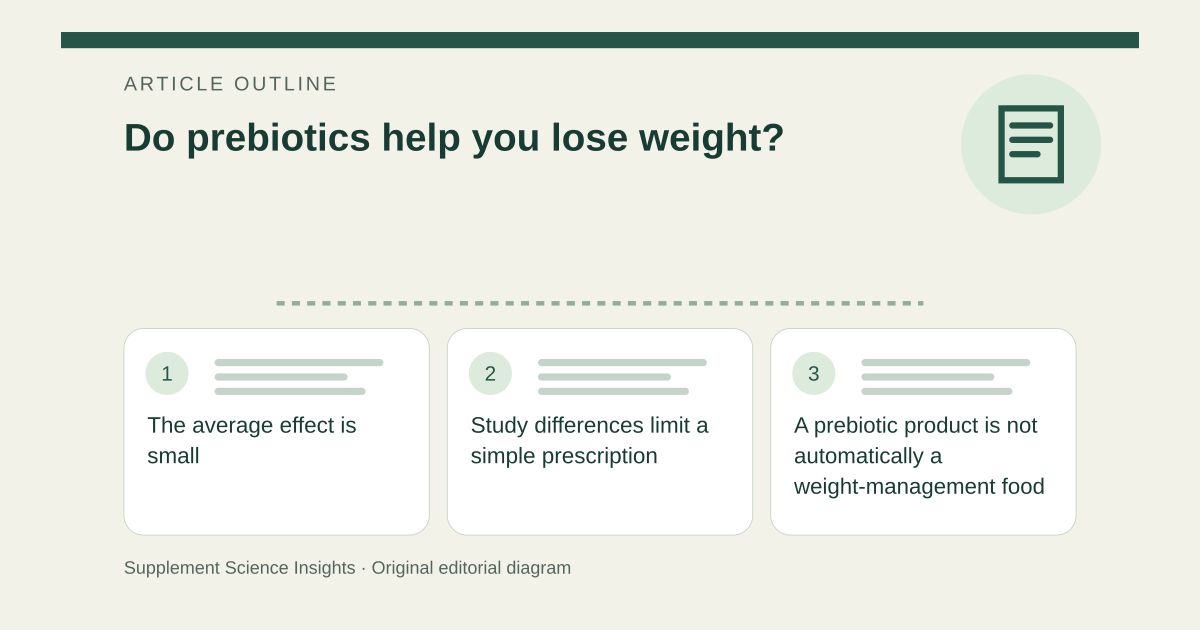
The average effect is small
A 2024 meta-analysis included 32 eligible studies of chicory inulin-type fructans. Its body-weight analysis, involving 1,184 participants, found an average difference of about 0.97 kg compared with placebo. This is a pooled difference across studies, not a promised amount someone will lose. [1]
Study differences limit a simple prescription
Body-weight results were considerably heterogeneous. Populations, products and study conditions varied, and the analysis does not establish one dose and duration that will work for everyone. The review was funded by BENEO, a prebiotic-ingredient producer; two authors were employees and another reported prebiotic-related consulting and speaking fees. [1]
A prebiotic product is not automatically a weight-management food
The evidence concerns specified inulin-type fructans, not every ingredient called prebiotic. A food or drink also contributes its own serving size and nutritional composition. Digestive tolerance and the overall eating pattern matter when deciding whether it is useful. [1]
Put a supplement result in context
Imagine someone adds a prebiotic drink while changing meals and activity. A later weight change cannot be assigned to the prebiotic alone. Use it, if appropriate and tolerated, as one dietary choice rather than expecting a microbiome change to guarantee meaningful weight loss. [1]
| Evidence | Limit |
|---|---|
| About1kg mean difference | Not an individual forecast |
| Chicory fructans | Not every prebiotic |
| Variable study results | No guaranteed regimen |
| Industry funding | Relevant context for interpretation |
Sources for this article
- The effects of chicory inulin-type fructans supplementation on weight management outcomes: systematic review, meta-analysis, and meta-regression of randomized controlled trials - PMC
Source consulted: 2026-09-21. This is a reference resource, not a claim that we conducted the studies or tested a product.