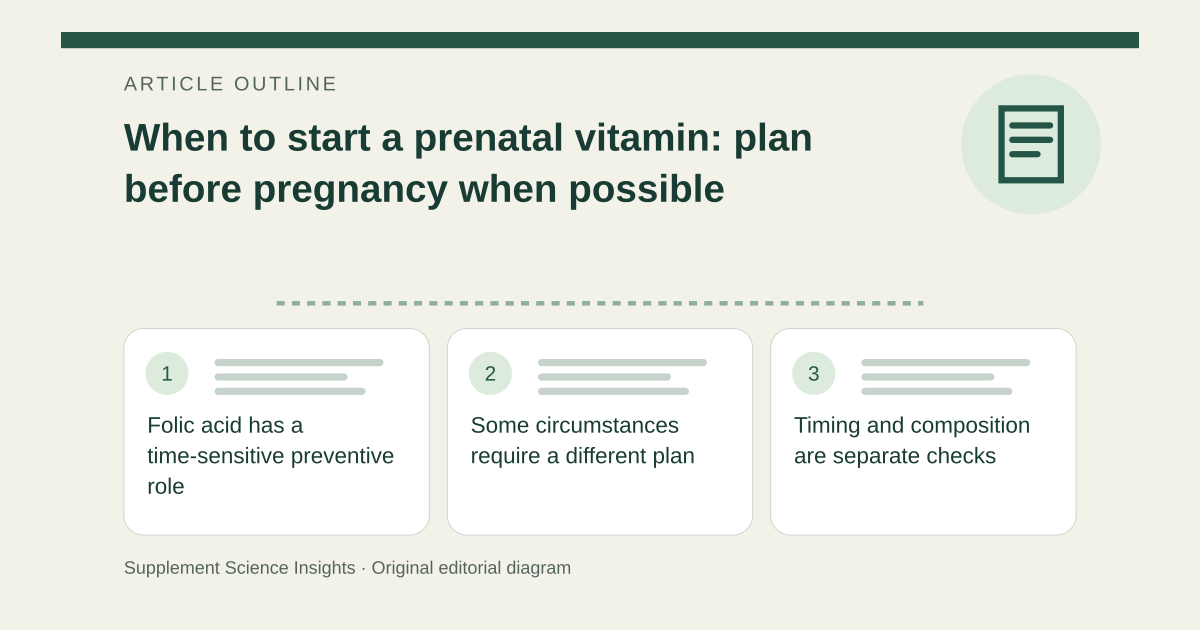
Folic acid has a time-sensitive preventive role
The NIH Office of Dietary Supplements summarizes recommendations to obtain folic acid before conception and during early pregnancy to reduce neural tube defect risk. Its table reports the U.S. Preventive Services Task Force recommendation of 400–800 micrograms daily for people planning or capable of pregnancy, beginning at least one month before conception. [1]
That advice concerns a defined nutrient and preventive purpose. It does not mean every botanical or extra ingredient marketed in a prenatal product has evidence of benefit before conception. [1]
Some circumstances require a different plan
A previous pregnancy affected by a neural tube defect and certain medicines can change the clinical recommendation. The general preventive amount should not be substituted for an individualized plan in a higher-risk situation. Do not create a higher-dose regimen by taking several prenatal tablets. [1]
If pregnancy has already begun, discuss current intake and supplements at prenatal care rather than assuming an earlier missed window makes care pointless. Nutritional needs continue throughout pregnancy, and no supplement guarantees a particular outcome. [1]
Timing and composition are separate checks
Imagine someone plans pregnancy next year and buys a product labeled prenatal. The useful checks are when folic acid should begin, whether the product supplies the intended form and amount, and whether other ingredients fit the person’s needs. The word prenatal alone answers none of those questions.
| Situation | Interpretation |
|---|---|
| Before conception | Discuss folic acid and dietary needs |
| Higher-risk history | Individual clinical plan |
| Already pregnant | Arrange care; do not double doses |
Sources for this article
- NIH ODS: Dietary Supplements and Life Stages — Pregnancy
Source consulted: 2026-09-17. This is a reference resource, not a claim that we conducted the studies or tested a product.