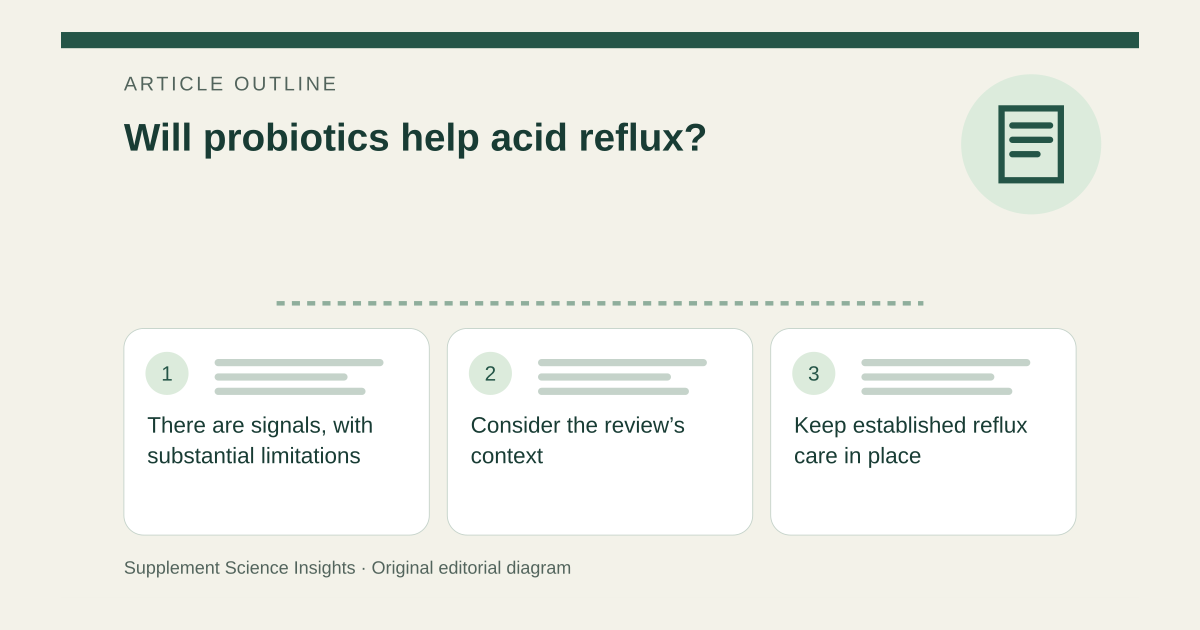
There are signals, with substantial limitations
A 2020 systematic review found encouraging results across some prospective studies, but designs, populations and outcomes differed enough to prevent pooling. Many studies were low quality. Reduced belching or nausea should not automatically be interpreted as control of acid exposure or healing of esophagitis. [1]
Consider the review’s context
The review was funded by DuPont, a probiotic manufacturer, and both authors were company employees. This does not negate its findings, but reinforces the need to consider methods and independent confirmation. Its conclusions call for better randomized, blinded studies rather than a universal recommendation. [1]
Keep established reflux care in place
NHS recommends identifying triggers, avoiding meals close to bedtime and using appropriate pharmacy or prescribed treatment. Frequent heartburn, food sticking, repeated vomiting or unexplained weight loss needs assessment. Do not stop acid-suppressing medicine because a supplement claims to rebalance the gut. [2]
Track the right symptom
Imagine belching improves while burning pain and regurgitation persist. That is not complete reflux control. Discuss ongoing symptoms and the exact probiotic with the treating clinician instead of assuming the product has corrected the underlying problem. [2][1]
| Outcome | What it does not prove |
|---|---|
| Less belching | Healed esophagus |
| Less nausea | Reduced acid exposure |
| One positive preparation | All probiotics work |
| Persistent reflux | No need for standard care |
Sources for this article
- Gastroesophageal Reflux Disease and Probiotics: A Systematic Review - PMC
Source consulted: 2026-09-21. This is a reference resource, not a claim that we conducted the studies or tested a product. - Heartburn and acid reflux - NHS
Source consulted: 2026-09-21. This is a reference resource, not a claim that we conducted the studies or tested a product.