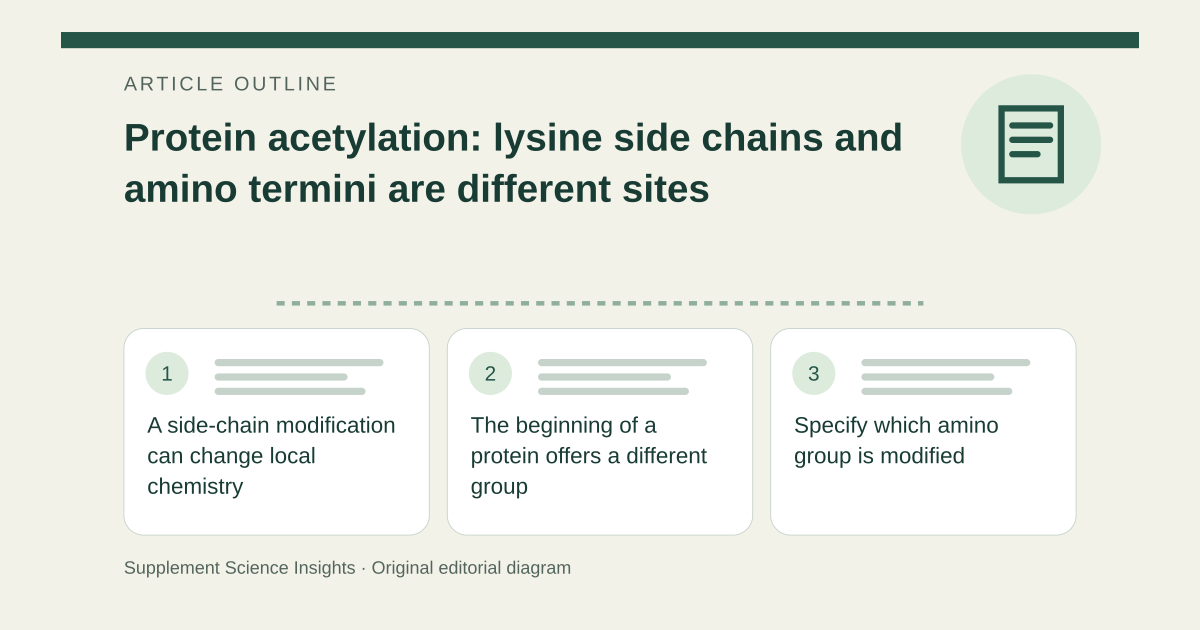
A side-chain modification can change local chemistry
The cell-biology text describes acetylation of lysine residues in histone tails. It removes the positive charge of the affected lysine amino group and can influence chromatin interactions. Enzymes add and remove these modifications. [1]
That does not mean every lysine in every protein is acetylated. The location and regulatory context are part of the biological question. [1]
The beginning of a protein offers a different group
The protein-processing chapter separately describes acetyl groups added to amino-terminal residues. This involves the free amino group at the start of the chain rather than requiring a lysine side chain at an internal position. [2][1]
Do not infer a dietary supplement effect from the existence of either modification. Describing a cellular reaction does not establish that consuming an amino acid selectively produces a desirable acetylation pattern. [2][1]
Specify which amino group is modified
Imagine a report says a protein is acetylated. Before interpreting it, determine whether it means an internal lysine side chain or the amino terminus. Those are different locations even though the same modification name is used.
| Detail | Interpretation |
|---|---|
| Lysine side chain | One possible acetylation site |
| Amino terminus | A different site |
| Acetylated protein | Site information still needed |
Sources for this article
- Chromosomal DNA and Its Packaging in the Chromatin Fiber - Molecular Biology of the Cell - NCBI Bookshelf
Source consulted: 2026-09-17. This is a reference resource, not a claim that we conducted the studies or tested a product. - Protein Folding and Processing - The Cell - NCBI Bookshelf
Source consulted: 2026-09-17. This is a reference resource, not a claim that we conducted the studies or tested a product.