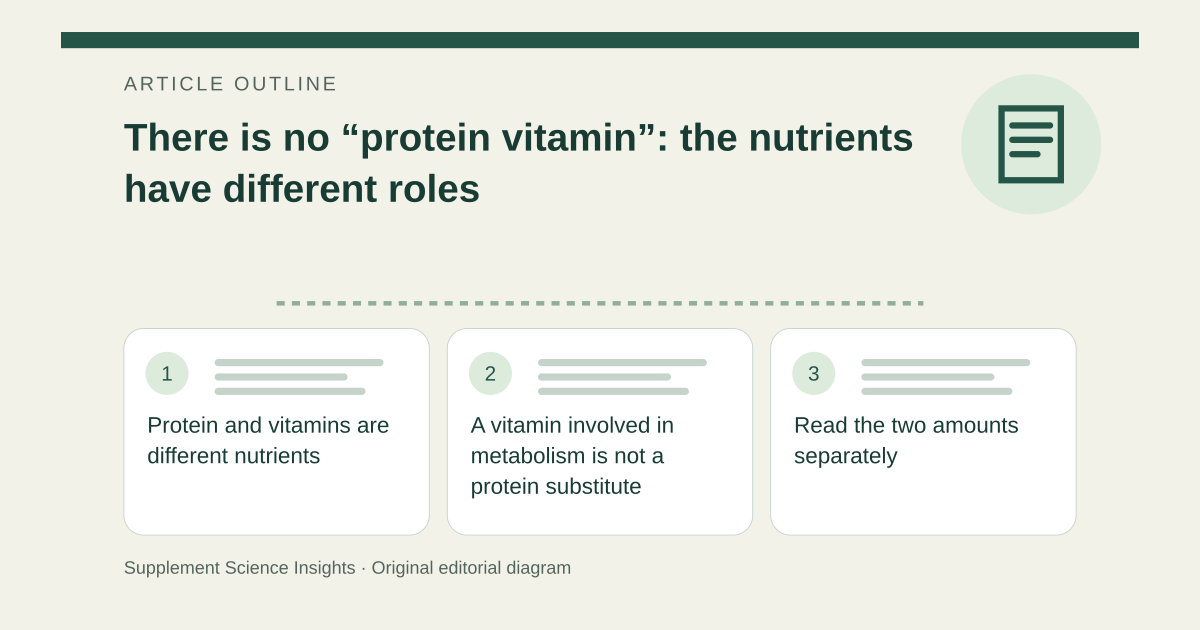
Protein and vitamins are different nutrients
Food protein is broken down into amino acids. These building blocks support growth and the maintenance and repair of tissues. Vitamins are a separate category of essential nutrients. Calling a product a protein vitamin does not tell you how much protein it supplies or establish that it can replace a protein-containing food. [1][2]
A vitamin involved in metabolism is not a protein substitute
For example, vitamin B6 has roles in reactions involving protein. That biochemical role does not mean B6 supplies the amino acids present in protein foods. Meat, fish, eggs, dairy, soy, beans and other plant foods can provide protein; a vitamin amount should not be converted into grams of protein. [1][2]
Read the two amounts separately
Imagine a fortified protein powder lists 20 g protein and a B6 amount in milligrams. The protein contribution is 20 g; the B6 entry is a separate nutrient. A vitamin-only tablet without a protein contribution does not fill a protein gap merely because its promotion mentions metabolism. [1][2]
| Hypothetical product | Protein accounting |
|---|---|
| Powder with 20 g protein plus B6 | Count 20 g protein; assess B6 separately |
| Vitamin-only tablet | Do not count it as a protein serving |
| Soy or beans in a meal | Use a matching food portion to estimate protein |
Sources for this article
- Protein in diet: MedlinePlus Medical Encyclopedia
Source consulted: 2026-09-20. This is a reference resource, not a claim that we conducted the studies or tested a product. - Vitamins: MedlinePlus Medical Encyclopedia
Source consulted: 2026-09-20. This is a reference resource, not a claim that we conducted the studies or tested a product.