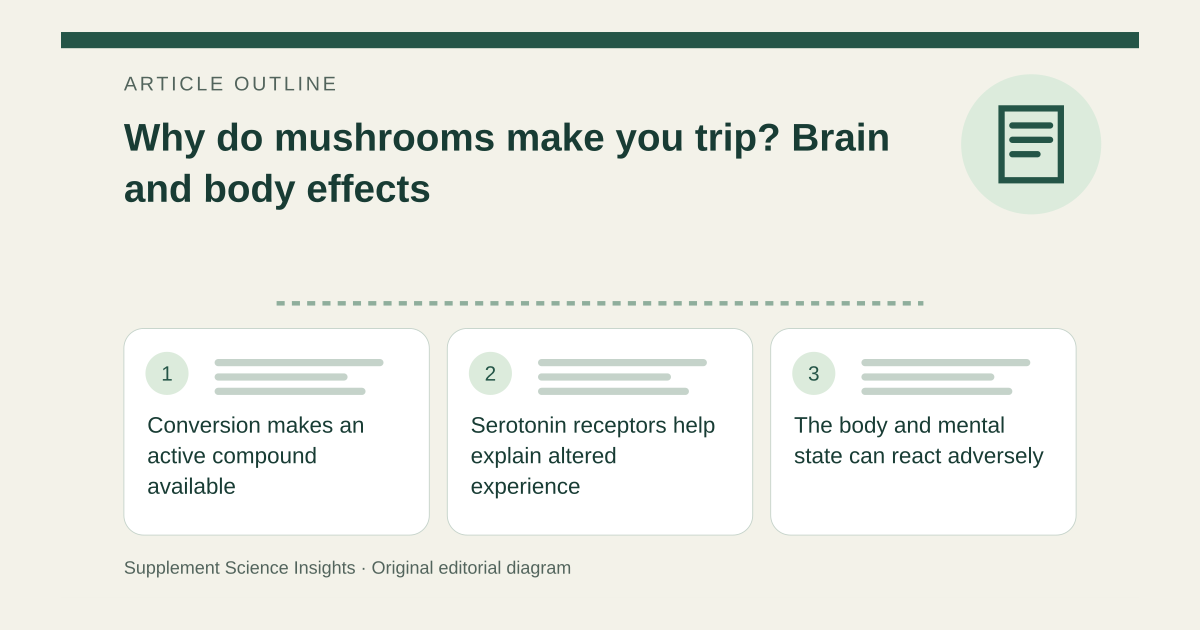
Conversion makes an active compound available
After ingestion, the body converts psilocybin into psilocin. Ordinary edible mushrooms do not all contain these psychedelic compounds, so the explanation applies to specific psychoactive mushrooms rather than mushrooms as a food category. [1]
Serotonin receptors help explain altered experience
NIDA identifies 5-HT2A serotonin receptors as a principal target of classic psychedelics. Changes in communication between brain regions, including networks associated with self-related thinking, help explain changes in perception and sense of self. The mechanism is more complex than a serotonin boost. [2]
The body and mental state can react adversely
Heart rate and blood pressure can rise, and nausea, headache, anxiety or panic may occur. Amount, potency, personal health, setting and other substances influence the response. A plausible brain mechanism does not establish a safe self-treatment. [2][1]
Separate altered signaling from clinical improvement
Imagine a report says brain networks became less synchronized and calls that brain repair. A changed scan is not the same as lasting symptom improvement or restored tissue. Clinical outcomes and adverse effects require their own evidence. [2]
| Finding | Does not establish |
|---|---|
| Psilocin receptor activity | A guaranteed pleasant experience |
| Changed connectivity | Brain repair |
| Strong subjective insight | Clinical benefit |
| No immediate distress | No later adverse effects |
Sources for this article
- Psilocybin for Mental Health and Addiction: What You Need To Know | NCCIH
Source consulted: 2026-09-21. This is a reference resource, not a claim that we conducted the studies or tested a product. - Psychedelic and Dissociative Drugs | National Institute on Drug Abuse (NIDA)
Source consulted: 2026-09-21. This is a reference resource, not a claim that we conducted the studies or tested a product.