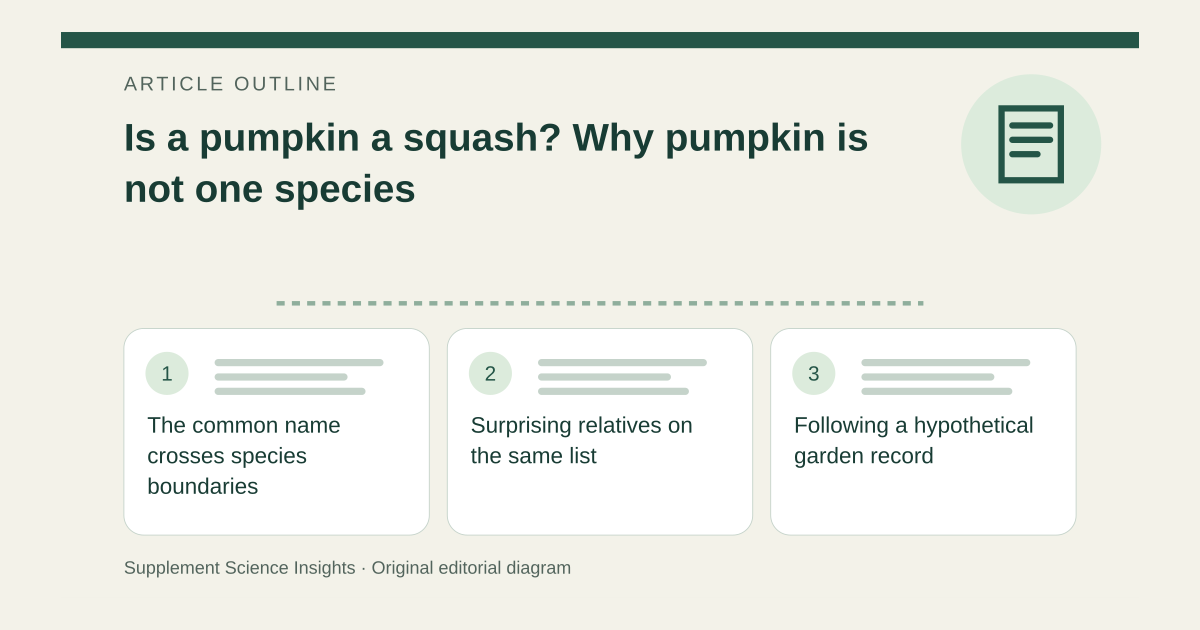
The common name crosses species boundaries
A pumpkin is a squash, but pumpkin does not identify one single botanical species. University of Minnesota Extension lists pumpkins among Cucurbita pepo and also among Cucurbita maxima types. Familiar squash names describe useful horticultural groupings that do not always match species boundaries. Orange color or a round shape is therefore not a complete botanical identification. [1]
Surprising relatives on the same list
Iowa State’s crop table places field and pie pumpkins, zucchini and acorn squash within Cucurbita pepo. Plants that look quite different can consequently share a species. This also matters when saving seed: compatible varieties can cross, but cross-pollination does not transform the flesh of the current season’s fruit into a new hybrid. The genetic combination is carried in the seeds. [2]
Following a hypothetical garden record
A gardener writes only “pumpkin” on a saved-seed envelope. That note records a common crop name but leaves the species and variety uncertain. Keeping the original packet’s species and cultivar information makes the record more useful. It still does not guarantee that saved seeds will reproduce the same crop if compatible neighboring varieties contributed pollen. [2]
| Name or example | Interpretation |
|---|---|
| Pumpkin | Common name spanning multiple squash species |
| Field pumpkin and zucchini | Both can belong to Cucurbita pepo |
| Saved seed from mixed varieties | May differ in the next generation |
Sources for this article
- Harvesting and storing melons, squash and pumpkins | UMN Extension
Source consulted: 2026-09-20. This is a reference resource, not a claim that we conducted the studies or tested a product. - Cross-Pollination Between Vine Crops | Yard and Garden
Source consulted: 2026-09-20. This is a reference resource, not a claim that we conducted the studies or tested a product.