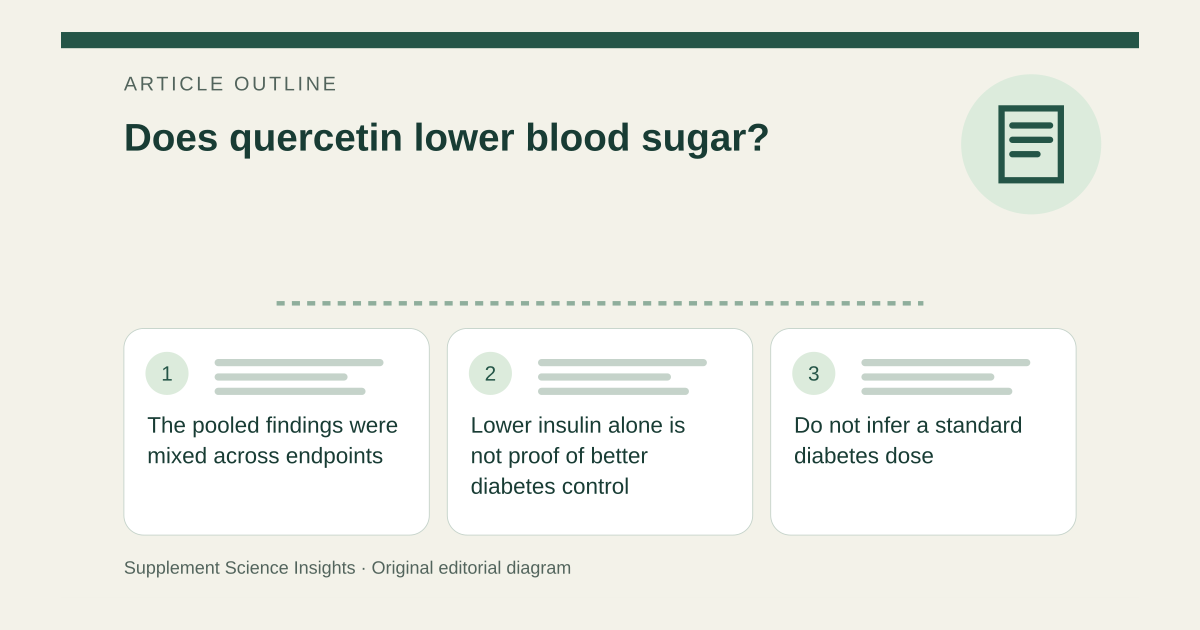
The pooled findings were mixed across endpoints
A 2023 umbrella review included five meta-analyses and additional randomized trials. It reported no overall effect on fasting glucose or HOMA-IR, while insulin concentrations showed a reduction. Evidence certainty ranged from very low to moderate. [1]
Lower insulin alone is not proof of better diabetes control
An insulin result needs interpretation alongside glucose, clinical context and other outcomes. Laboratory pathways involving inflammation or antioxidant activity cannot replace human evidence that a supplement improves meaningful diabetes outcomes. [1]
Do not infer a standard diabetes dose
Different study designs, populations and formulations limit generalization. The review called for higher-quality trials with longer follow-up. It does not establish one quercetin dose that can safely replace or reduce prescribed glucose-lowering medicine. [1]
Keep monitoring and treatment decisions with the care team
Imagine a person wants to cut diabetes medication after reading that quercetin reduces insulin. Discuss the actual glucose pattern and full supplement label with the clinician. A change in one research biomarker is not a personal treatment instruction. [1][2]
| Measure | What it describes |
|---|---|
| Fasting glucose | A glucose concentration |
| Insulin | A hormone concentration |
| HOMA-IR | An estimated resistance measure |
| Clinical treatment benefit | Requires broader evidence |
Sources for this article
- The effects of Quercetin supplementation on cardiometabolic outcomes: An umbrella review of meta-analyses of randomized controlled trials.
Source consulted: 2026-09-21. This is a reference resource, not a claim that we conducted the studies or tested a product. - Dietary Supplements: What You Need to Know
Source consulted: 2026-09-21. This is a reference resource, not a claim that we conducted the studies or tested a product.