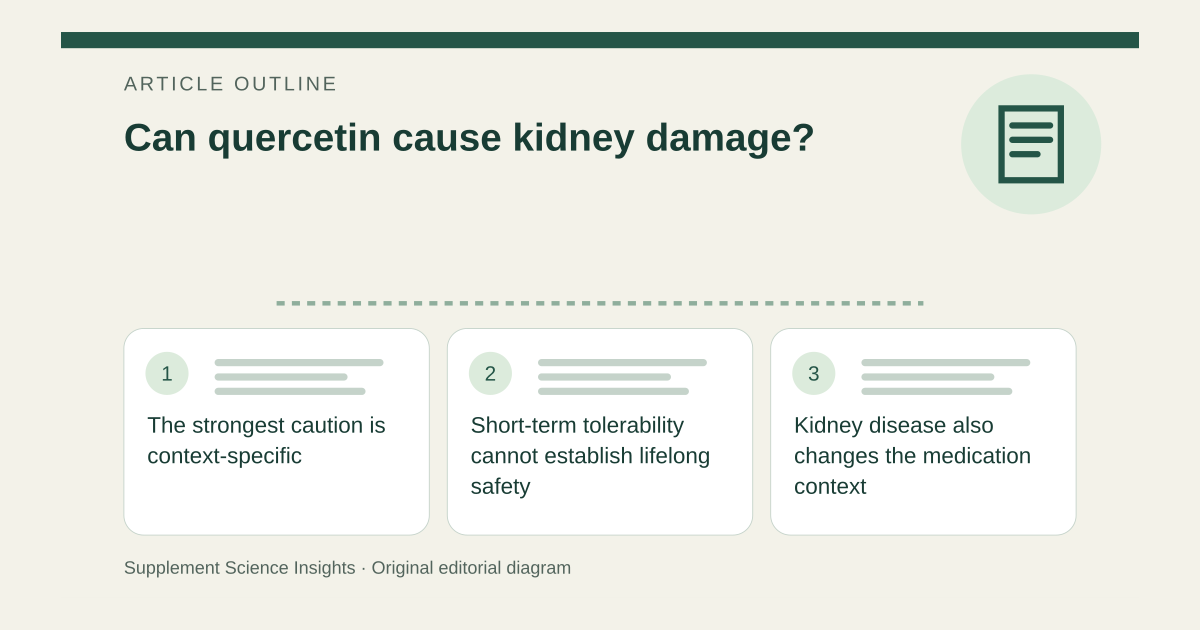
The strongest caution is context-specific
The reviewed safety analysis distinguishes normal dietary exposure from concentrated isolated quercetin. It identifies possible adverse effects in animals with pre-existing kidney damage. Animal findings justify caution but do not provide a human incidence rate or a universal harmful dose. [1]
Short-term tolerability cannot establish lifelong safety
Most reported human adverse effects in the review were mild, but adequate evidence for high doses over more than twelve weeks was lacking. That historical evidence gap should not be converted into a recommendation to take the largest dose tolerated. [1]
Kidney disease also changes the medication context
People with kidney disease often have treatment regimens that need individualized review. MSK describes potential quercetin interactions involving drug metabolism. Bring the exact supplement to the renal team or pharmacist instead of assuming that separating doses eliminates every interaction. [2][3]
Do not use experimental protection claims as clearance
Imagine a laboratory study calls quercetin kidney-protective. That does not establish safety of a retail high-dose product in someone with chronic kidney disease. Ask about the actual clinical situation before starting it. [1]
| Finding | Limit |
|---|---|
| Normal food exposure | Not a high-dose supplement |
| Animal damaged-kidney signal | No human incidence estimate |
| Short-term mild effects | Not long-term clearance |
| Existing kidney disease | Requires individualized review |
Sources for this article
- Safety Aspects of the Use of Quercetin as a Dietary Supplement.
Source consulted: 2026-09-21. This is a reference resource, not a claim that we conducted the studies or tested a product. - Quercetin | Memorial Sloan Kettering Cancer Center
Source consulted: 2026-09-21. This is a reference resource, not a claim that we conducted the studies or tested a product. - Dietary Supplements: What You Need to Know
Source consulted: 2026-09-21. This is a reference resource, not a claim that we conducted the studies or tested a product.