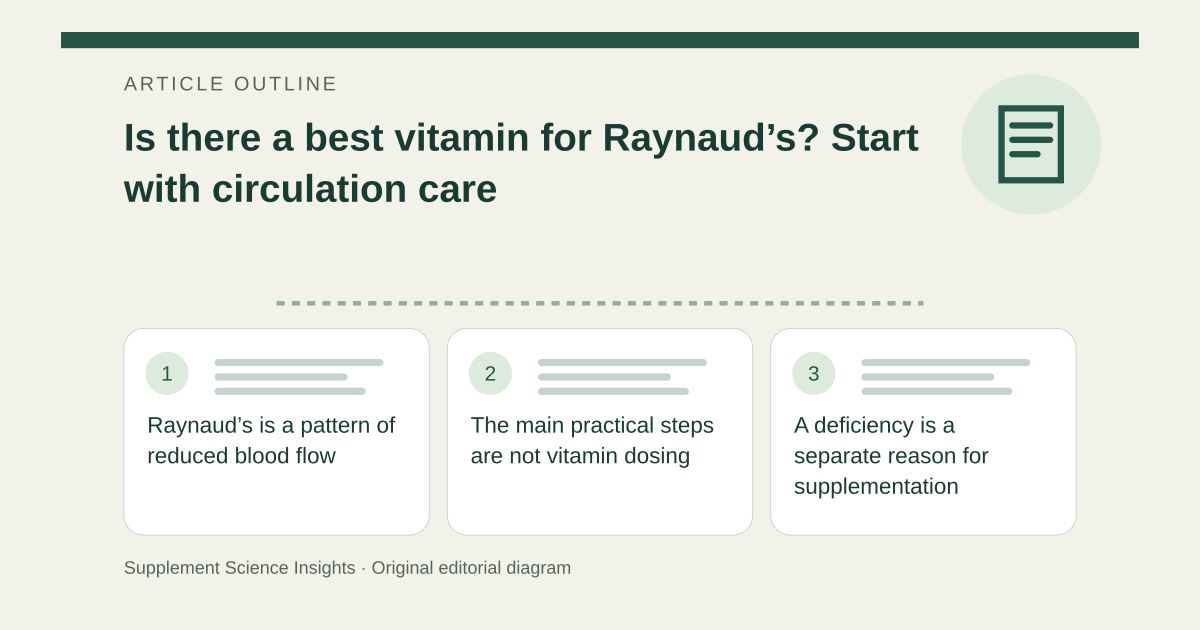
Raynaud’s is a pattern of reduced blood flow
Cold or stress can trigger finger or toe color changes, numbness and pain. NHS notes that Raynaud’s can occur with other conditions, medicines or vibration exposure. Those possibilities make a generic vitamin recommendation an inadequate answer to new symptoms. [1]
The main practical steps are not vitamin dosing
Keep warm, protect hands and feet and avoid abrupt temperature changes. NHS also advises avoiding smoking and excessive caffeine. If symptoms are severe or worsening, a clinician may consider a circulation medicine such as nifedipine. These steps do not establish that a vitamin supplement treats Raynaud’s. [1]
A deficiency is a separate reason for supplementation
A confirmed nutrient gap may justify replacement, but it does not follow that larger amounts will improve circulation attacks. Review the specific supplement and medicines with a clinician rather than replacing a treatment plan with an antioxidant or circulation blend. [2]
Notice changes in the symptom pattern
Imagine previously mild attacks now affect only one side or occur with joint pain, rash or muscle weakness. NHS recommends assessment for those patterns. Record the triggers and associated symptoms; do not use an apparent response to a vitamin as a diagnosis. [1]
| Finding | Next question |
|---|---|
| Cold-triggered episodes | How can triggers be managed? |
| One-sided or worsening symptoms | Is another condition involved? |
| Suspected vitamin deficiency | Is targeted replacement indicated? |
Sources for this article
- Raynaud's - NHS
Source consulted: 2026-09-20. This is a reference resource, not a claim that we conducted the studies or tested a product. - Dietary Supplements: What You Need to Know
Source consulted: 2026-09-20. This is a reference resource, not a claim that we conducted the studies or tested a product.