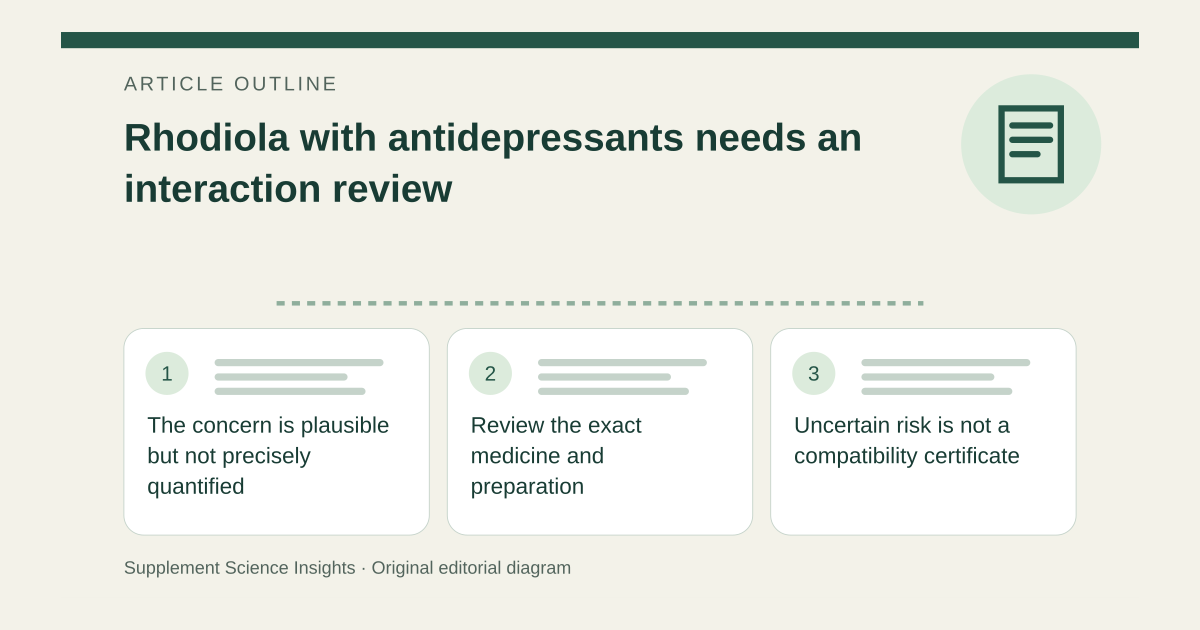
The concern is plausible but not precisely quantified
Memorial Sloan Kettering reports monoamine oxidase inhibition activity and the possibility of increased serotonergic side effects with antidepressants. It explicitly states that the clinical relevance remains to be determined. [1]
That wording supports caution and review. It does not establish a known reaction rate or prove that every antidepressant-rhodiola combination causes harm. [1]
Review the exact medicine and preparation
Tell the prescriber or pharmacist which rhodiola product, amount and antidepressant are involved before combining them. A general adaptogen claim does not resolve the interaction question. [1]
Do not stop or reduce a prescribed antidepressant to accommodate a supplement. Separating the times of day has not been established by this reference as a way to eliminate the potential interaction. [1]
Uncertain risk is not a compatibility certificate
Imagine a label says natural stress support but says nothing about prescriptions. That omission does not show that it is compatible with the antidepressant already being taken.
| Detail | Interpretation |
|---|---|
| Mechanism concern | Possible serotonergic effects |
| Clinical relevance | Uncertain |
| Next step | Exact product and medicine review |
Sources for this article
- Rhodiola | Memorial Sloan Kettering Cancer Center
Source consulted: 2026-09-18. This is a reference resource, not a claim that we conducted the studies or tested a product.