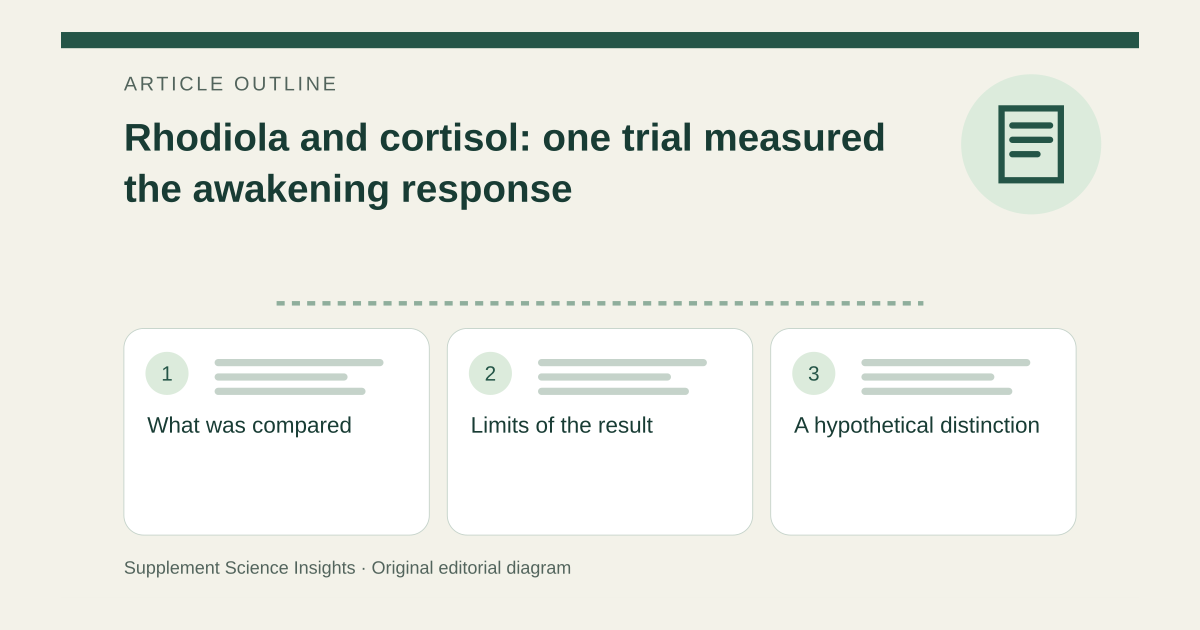
What was compared
Sixty adults meeting fatigue-syndrome criteria were randomized to a standardized rhodiola extract or placebo for 28 days. Researchers assessed symptoms, attention and salivary cortisol around awakening. [1]
Some symptom and attention comparisons favored the extract, and the cortisol response changed relative to controls. Other measures improved in both groups, making the direct group comparison important. [1]
Limits of the result
A timed awakening response is not the same as all-day cortisol exposure or an endocrine diagnosis. The result does not establish treatment for a cortisol disorder or justify assuming that a lower value is always healthier. Funding and conflicts were not established from the abstract. [1]
A hypothetical distinction
Imagine a hormone is sampled around waking on two study visits. A difference in that response cannot describe every hour of the day or determine the cause of an individual’s symptoms.
| Detail | Interpretation |
|---|---|
| 60 adults | Fatigue-syndrome population |
| 28 days | Short intervention |
| Awakening response | Timed hormone endpoint |
Sources for this article
- A randomised, double-blind, placebo-controlled, parallel-group study of the standardised extract shr-5 of the roots of Rhodiola rosea in the treatment of subjects with stress-related fatigue - PubMed
Source consulted: 2026-09-19. This is a reference resource, not a claim that we conducted the studies or tested a product.