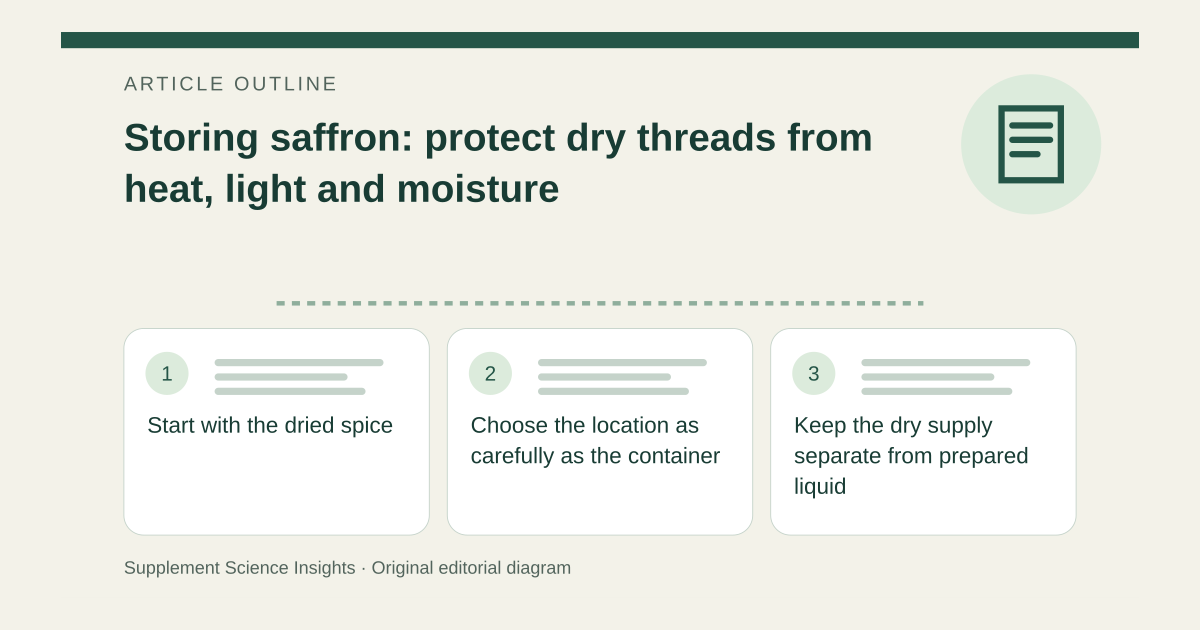
Start with the dried spice
University of Vermont describes saffron as harvested stigmas that are dried before culinary use. Its storage guidance is for that dry material. Freshly harvested, incompletely dried stigmas and a water infusion are different products and should not be assigned the same storage conditions. [1]
Choose the location as carefully as the container
A sealed jar next to the stove can still receive heat, and a clear jar on a sunny shelf remains exposed to light. Vermont recommends an airtight container away from direct sunlight and heat. Keep handling dry; Utah State notes that moisture entering dry foods can permit microbial growth. [1][2]
Keep the dry supply separate from prepared liquid
Imagine a few threads are infused for tonight’s dish while the rest stay in their original dry container. That keeps the stored supply from being repeatedly wetted. Do not pour unused infusion back into the dry spice. Follow the product’s instructions and replace material with questionable storage or visible spoilage rather than inventing a universal lifetime. [1][2]
| Choice | Practical interpretation |
|---|---|
| Dry sealed threads | Protected stored supply |
| Jar beside a hot stove | Unnecessary heat exposure |
| Prepared infusion | Different storage situation |
Sources for this article
- Saffron: World's Most Expensive Spice | University of…
Source consulted: 2026-09-20. This is a reference resource, not a claim that we conducted the studies or tested a product. - Food Storage Conditions — Utah State University Extension
Source consulted: 2026-09-20. This is a reference resource, not a claim that we conducted the studies or tested a product.