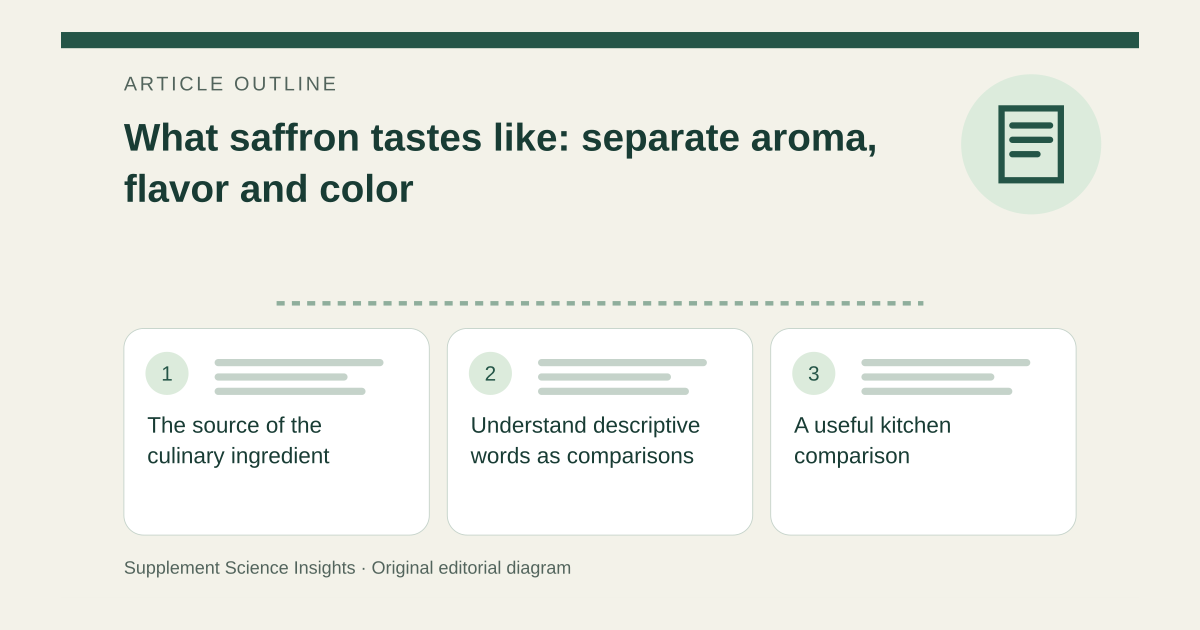
The source of the culinary ingredient
Saffron consists of dried stigmas from Crocus sativus. UVM Extension describes its strong fragrance, distinctive flavor and color contribution. Those are different sensations: a dish can look strongly yellow without reproducing saffron’s aroma, and a pleasing scent does not prove authenticity. [1]
Understand descriptive words as comparisons
When tasting a familiar saffron dish, you might describe the aroma in floral, earthy or hay-like terms. A sweet-smelling impression does not mean the spice supplies the sweetness of sugar. People and preparations differ, so this page does not offer an objective universal flavor score or claim a particular adjective verifies quality. [1]
A useful kitchen comparison
Imagine preparing a small portion of an established rice recipe with culinary saffron and leaving a comparable portion unseasoned. Notice color, aroma and flavor separately. Start with the recipe’s stated amount; increasing the quantity simply to make the color brighter is not an authenticity assay or evidence of added health benefit. [1]
| Hypothetical observation | What it describes |
|---|---|
| Yellow rice | Color |
| Floral or earthy impression | Personal aroma description |
| Strong scent | Not proof of purity or dose |
Sources for this article
- Saffron: World's Most Expensive Spice | University of…
Source consulted: 2026-09-20. This is a reference resource, not a claim that we conducted the studies or tested a product.