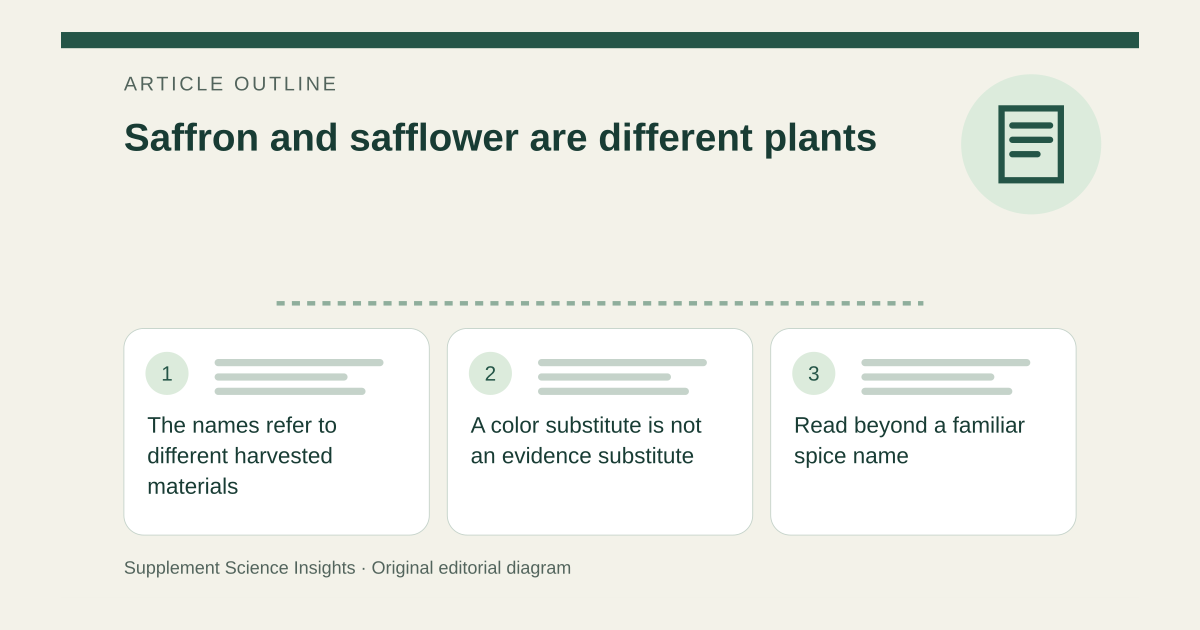
The names refer to different harvested materials
University of Vermont Extension identifies saffron as the dried stigmas of Crocus sativus flowers. Kew identifies safflower as Carthamus tinctorius and describes the historical use of its flowers as a cheaper saffron substitute. [1][2]
Safflower also supplies seed oil. A flower ingredient and a seed oil are different preparations even when they come from the same safflower plant. [1][2]
A color substitute is not an evidence substitute
A recipe may use an ingredient for color, flavor or cost. That choice does not establish the same composition as a saffron extract used in research. [1][2]
Check the scientific name and plant part before comparing a product with a study. False saffron is a common-name warning to resolve identity, not proof of Crocus content. [1][2]
Read beyond a familiar spice name
Imagine a package says saffron substitute and lists Carthamus tinctorius. It identifies safflower and cannot inherit research findings for a Crocus sativus preparation.
| Detail | Interpretation |
|---|---|
| Crocus sativus stigmas | Saffron |
| Carthamus tinctorius | Safflower |
| Culinary substitution | Not research equivalence |
Sources for this article
- Saffron: World's Most Expensive Spice | University of…
Source consulted: 2026-09-18. This is a reference resource, not a claim that we conducted the studies or tested a product. - Safflower - Carthamus tinctorius | Plants | Kew
Source consulted: 2026-09-18. This is a reference resource, not a claim that we conducted the studies or tested a product.