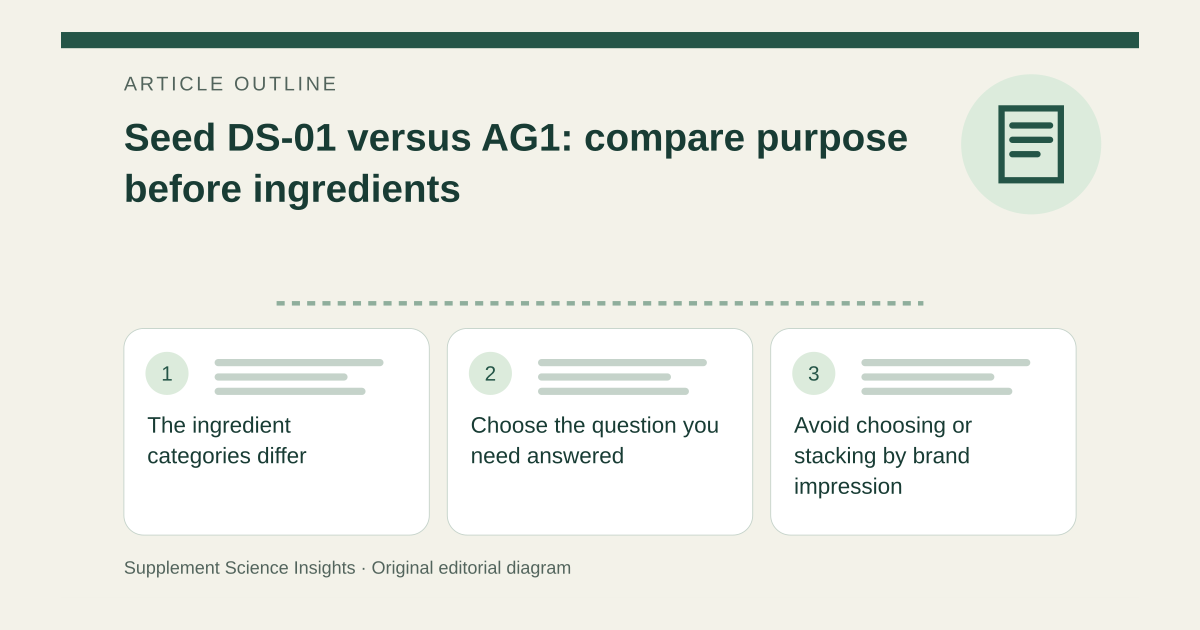
The ingredient categories differ
Seed’s DS-01 ingredient page describes 24 bacterial strains and a pomegranate-derived non-fiber prebiotic. The inspected US AG1 overview describes a powder combining vitamins, minerals, probiotics and other ingredients. These descriptions identify the product categories; they do not establish that either will improve a particular person’s symptoms. [1][2]
Choose the question you need answered
For a probiotic goal, compare strain identities and evidence for the intended use rather than counting strains. For nutrient intake, compare the current AG1 Supplement Facts panel with food intake and other supplements. A larger ingredient list does not demonstrate a larger clinical benefit. [3][4]
Avoid choosing or stacking by brand impression
Imagine already taking a multivitamin and considering both products for occasional bloating. First check nutrient overlap and the specific probiotic rationale. This formulation comparison does not establish a head-to-head winner, and regional formulas or later label changes require a fresh package check. [4][3][2]
| Check | Interpretation |
|---|---|
| Probiotic objective | Match strains to the intended use |
| Nutrient objective | Compare the current nutrient panel |
| Using both | Review overlap rather than assume added benefit |
Sources for this article
- What are the ingredients of DS-01? — Seed
Source consulted: 2026-09-20. This is a reference resource, not a claim that we conducted the studies or tested a product. - AG1: What is AG1? US product overview
Source consulted: 2026-09-20. This is a reference resource, not a claim that we conducted the studies or tested a product. - Probiotics - Health Professional Fact Sheet
Source consulted: 2026-09-20. This is a reference resource, not a claim that we conducted the studies or tested a product. - Dietary Supplements: What You Need to Know
Source consulted: 2026-09-20. This is a reference resource, not a claim that we conducted the studies or tested a product.