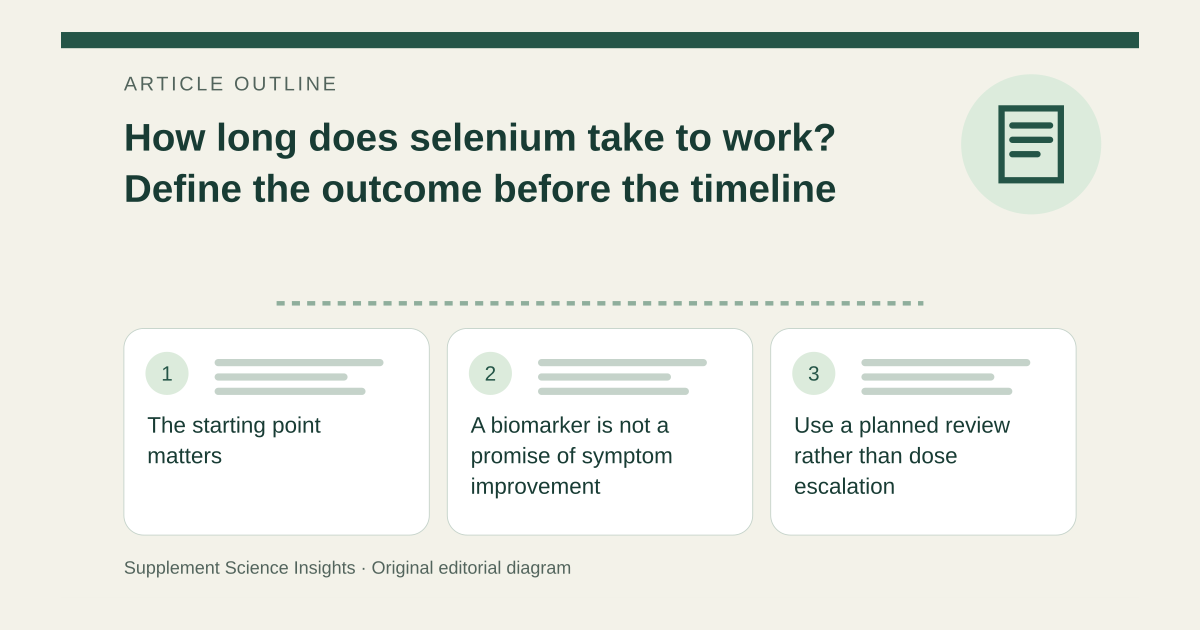
The starting point matters
Someone with inadequate selenium intake and someone already meeting their needs are not the same clinical situation. ODS describes selenium’s roles in selenoproteins, but a necessary nutrient function does not guarantee that adding more produces a noticeable benefit. First establish the reason for supplementation. [1]
A biomarker is not a promise of symptom improvement
Serum or plasma selenium can help assess status; other markers reflect different processes and can be affected by inflammation. Thyroid research remains context-dependent, and ODS calls for further study of supplementation in thyroid disease. A laboratory change cannot simply be relabeled as improved energy, hair growth or disease control. [1]
Use a planned review rather than dose escalation
Imagine a user feels no different after starting selenium and considers doubling it. The absence of a sensation does not diagnose a continued deficiency. Excess intake can itself cause hair and nail problems, gastrointestinal symptoms and other harms. Review the indication and monitoring plan with the clinician rather than setting a higher dose to meet an arbitrary deadline. [1]
| Situation | Interpretation |
|---|---|
| Nutrient status | May be assessed with appropriate tests |
| Symptom or disease outcome | Requires its own evidence |
| No obvious change | Not a reason to automatically double intake |
Sources for this article
- Selenium - Health Professional Fact Sheet
Source consulted: 2026-09-20. This is a reference resource, not a claim that we conducted the studies or tested a product.