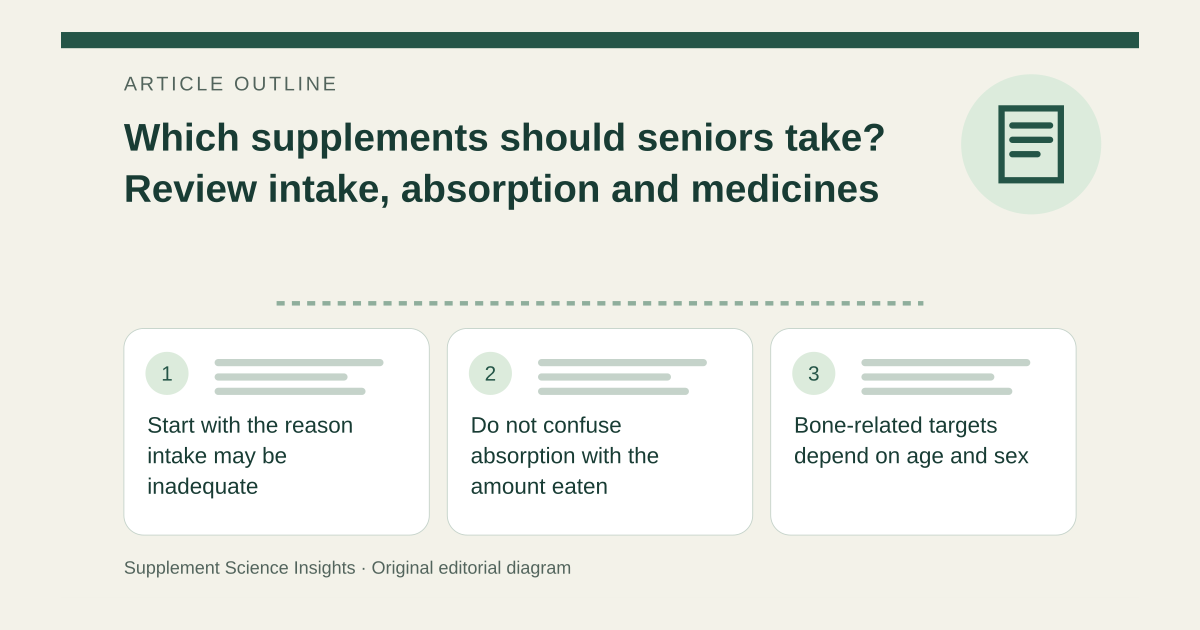
Start with the reason intake may be inadequate
NIA recommends varied foods and consideration of supplements when the diet does not supply enough nutrients. Discuss practical barriers to eating as well as the nutrient label. A pill can add a nutrient, but a limited eating pattern still deserves attention. [1]
Do not confuse absorption with the amount eaten
B12 is a particular concern when older adults cannot adequately absorb the naturally food-bound vitamin. A clinician can assess whether fortified foods, oral supplementation or another treatment is appropriate. More of the same food may not resolve an absorption disorder. [2]
Bone-related targets depend on age and sex
After 70, calcium reference intake is 1,200 mg daily for men and women, and vitamin D is 800 IU. Before that, the calcium reference differs for men and women ages 51–70. Count food and every supplement together before deciding on an addition. [3][4]
Review the entire medicine and supplement list
Keep names, doses and reasons for use together. NIA highlights interaction risks and advises against assuming that natural products are safe. An unexplained symptom or a new prescription is a reason to revisit the list, not simply add another product. [1]
Prefer one resolved question to several new bottles
Imagine an older adult takes a multivitamin, a separate B complex and a bone blend. A review might reveal overlapping nutrients while the actual dietary gap remains unclear. Establish the purpose of each product before adding a senior formula. [5]
| Situation | Decision to discuss |
|---|---|
| Poor dietary variety | Review intake and eating barriers |
| Possible malabsorption | Assess the cause |
| Several overlapping products | Reconcile doses and purposes |
Sources for this article
- Dietary Supplements for Older Adults
Source consulted: 2026-09-20. This is a reference resource, not a claim that we conducted the studies or tested a product. - Vitamin B12 - Health Professional Fact Sheet
Source consulted: 2026-09-20. This is a reference resource, not a claim that we conducted the studies or tested a product. - Calcium - Health Professional Fact Sheet
Source consulted: 2026-09-20. This is a reference resource, not a claim that we conducted the studies or tested a product. - Vitamin D - Health Professional Fact Sheet
Source consulted: 2026-09-20. This is a reference resource, not a claim that we conducted the studies or tested a product. - Multivitamin/mineral Supplements
Source consulted: 2026-09-20. This is a reference resource, not a claim that we conducted the studies or tested a product.