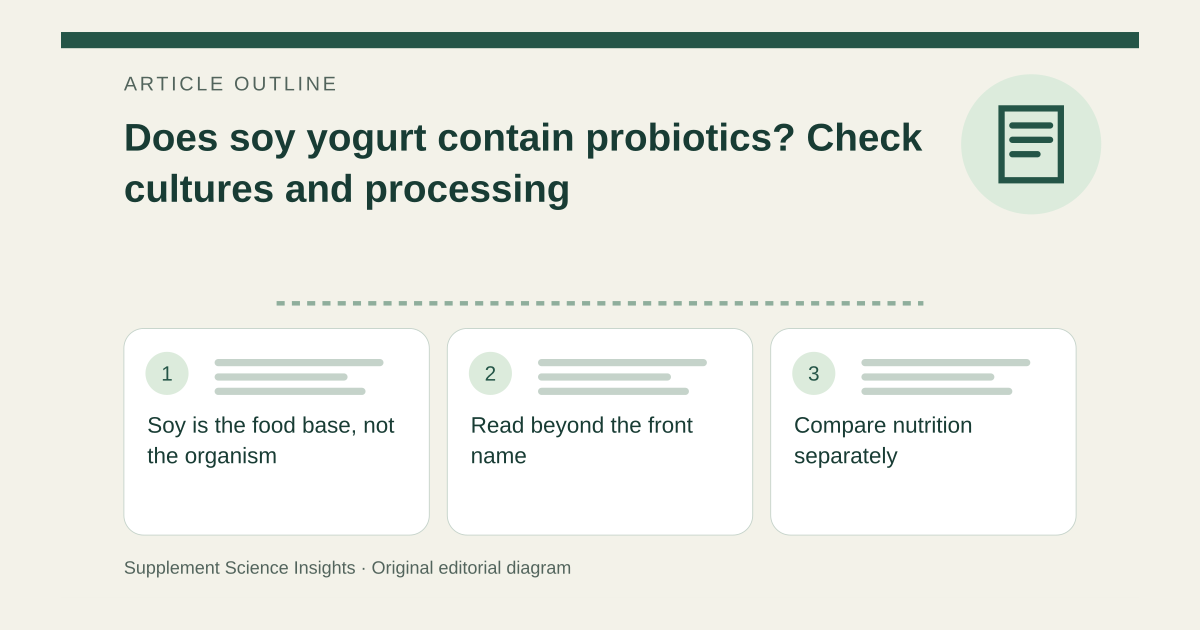
Soy is the food base, not the organism
A soy beverage can be cultured to produce a yogurt-style food. The microbes used and whether they remain alive at consumption are separate from the plant base. A thickened soy dessert and a live-culture fermented soy product therefore should not be assumed to be the same thing. [1]
Read beyond the front name
Look for the culture information and whether the product was heat-treated after fermentation. Where a probiotic benefit is claimed, seek the relevant strain and viable amount rather than relying on a generic cultures statement. ODS notes that not all products labeled probiotic have demonstrated benefits. [2][1]
Compare nutrition separately
Imagine two soy yogurts list different cultures and have different protein or added-sugar amounts. Culture evidence and nutritional composition are parallel questions. Choose the food using the full label and dietary needs, while avoiding a claim that its soy base alone treats digestive symptoms or guarantees a particular microbial exposure. [2]
| Example | Interpretation |
|---|---|
| Soy base | Plant ingredient identity |
| Live cultures | Requires current product information |
| Probiotic claim | Needs evidence beyond fermentation |
Sources for this article
- The International Scientific Association for Probiotics and Prebiotics (ISAPP) consensus statement on fermented foods | Nature Reviews Gastroenterology & Hepatology
Source consulted: 2026-09-20. This is a reference resource, not a claim that we conducted the studies or tested a product. - Probiotics - Health Professional Fact Sheet
Source consulted: 2026-09-20. This is a reference resource, not a claim that we conducted the studies or tested a product.