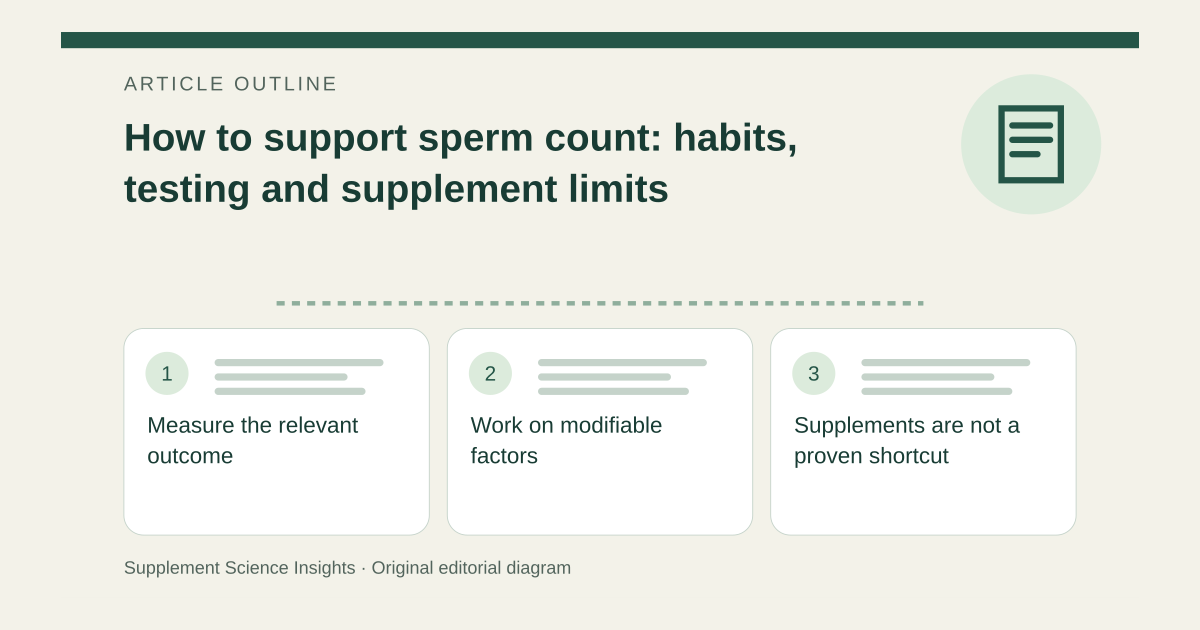
Measure the relevant outcome
Semen analysis distinguishes total sperm count from concentration, movement and shape. A larger fluid volume does not automatically mean more sperm or better fertility. NHS describes repeating an abnormal semen analysis, commonly around three months later, and specialist investigation if a problem persists. [1][2]
Work on modifiable factors
NHS advises stopping smoking, reducing alcohol, working toward a healthy weight when overweight and avoiding anabolic steroids and other recreational drugs. It also advises reducing harmful occupational exposures and avoiding overheating the testicles through tight clothing. These steps may help; none guarantees a particular increase. [2]
Supplements are not a proven shortcut
The AUA/ASRM guideline finds the clinical usefulness of vitamins and antioxidant supplements uncertain and cannot recommend particular agents for male infertility. A nutrient’s normal reproductive role does not establish that extra doses improve pregnancy or live-birth outcomes. [3][4]
Do not use testosterone as a fertility booster
The guideline advises against exogenous testosterone when current or future fertility is desired because sperm production can be suppressed. Discuss fertility plans with the prescriber rather than starting a hormone product or changing treatment independently. Appropriate care may instead involve treating an identified cause or assisted reproduction. [3][2]
Seek assessment rather than repeatedly changing supplements
NHS recommends seeking help after a year of regular unprotected intercourse without pregnancy, or six months when the partner is 36 or older. Known problems can justify earlier discussion. Both partners may need assessment. Imagine a supplement improves one semen measurement: that alone does not show that a fertility problem is resolved. [2][1]
| Measure | Meaning |
|---|---|
| Volume | Fluid amount |
| Sperm count and motility | Different aspects of the sample |
| Pregnancy outcome | A separate clinical goal |
Sources for this article
- Semen Analysis: MedlinePlus Medical Test
Source consulted: 2026-09-20. This is a reference resource, not a claim that we conducted the studies or tested a product. - Low sperm count - NHS
Source consulted: 2026-09-20. This is a reference resource, not a claim that we conducted the studies or tested a product. - AUA/ASRM Male Infertility Guideline, amended 2024
Source consulted: 2026-09-20. This is a reference resource, not a claim that we conducted the studies or tested a product. - Zinc - Health Professional Fact Sheet
Source consulted: 2026-09-20. This is a reference resource, not a claim that we conducted the studies or tested a product.