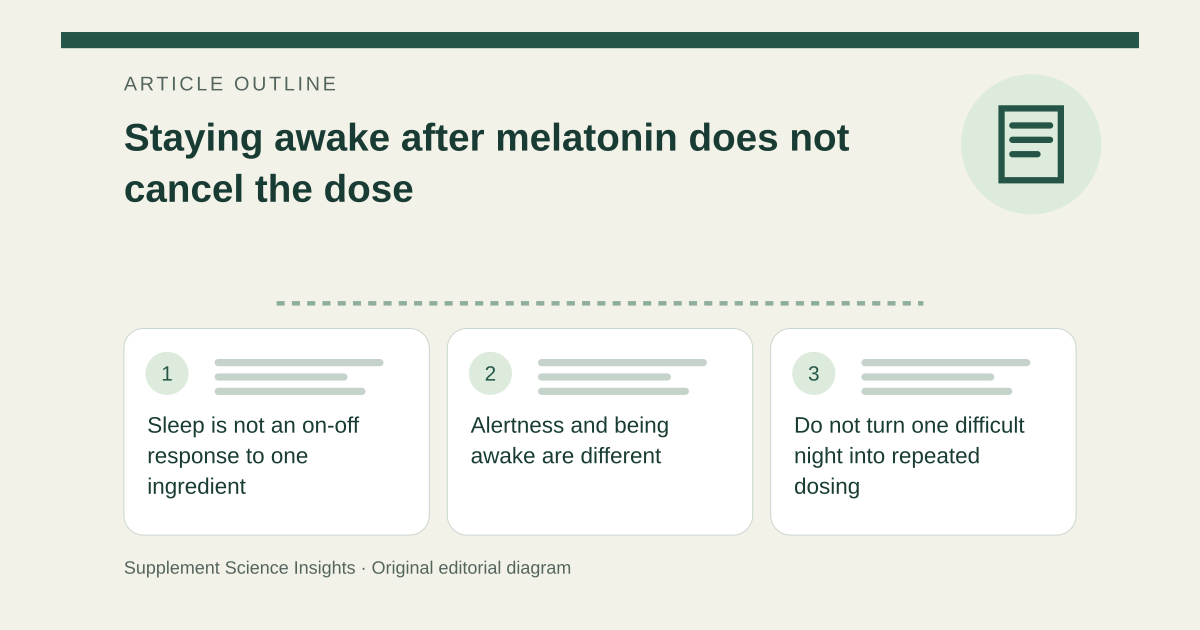
Sleep is not an on-off response to one ingredient
NHS describes melatonin as acting on receptors involved in the sleep cycle. Sleep environment, routine and the reason for the sleep problem remain relevant. Being awake after taking it does not prove a deficient dose, a failed product or an ability to safely resist all effects. [1]
Alertness and being awake are different
Someone can remain awake while feeling drowsy, dizzy or less able to make decisions. NHS advises avoiding driving and machinery when these effects occur. Trying to push through with alcohol or other substances can add risks rather than produce a useful measure of whether melatonin is working. [1][2]
Do not turn one difficult night into repeated dosing
Imagine a person keeps checking the clock and considers another dose because sleep has not arrived. Follow the actual product or prescription instructions; do not stack doses in response to the clock. If treatment repeatedly fails, review the sleep problem and regimen with a clinician rather than interpreting wakefulness as a reason for escalation. [3][1]
| Situation | Response or distinction |
|---|---|
| Still awake | Does not prove the dose is inactive |
| Drowsy but awake | Can still be impaired |
| Repeated sleep difficulty | Review the plan |
Sources for this article
- Common questions about melatonin - NHS
Source consulted: 2026-09-20. This is a reference resource, not a claim that we conducted the studies or tested a product. - Side effects of melatonin - NHS
Source consulted: 2026-09-20. This is a reference resource, not a claim that we conducted the studies or tested a product. - How and when to take melatonin - NHS
Source consulted: 2026-09-20. This is a reference resource, not a claim that we conducted the studies or tested a product.