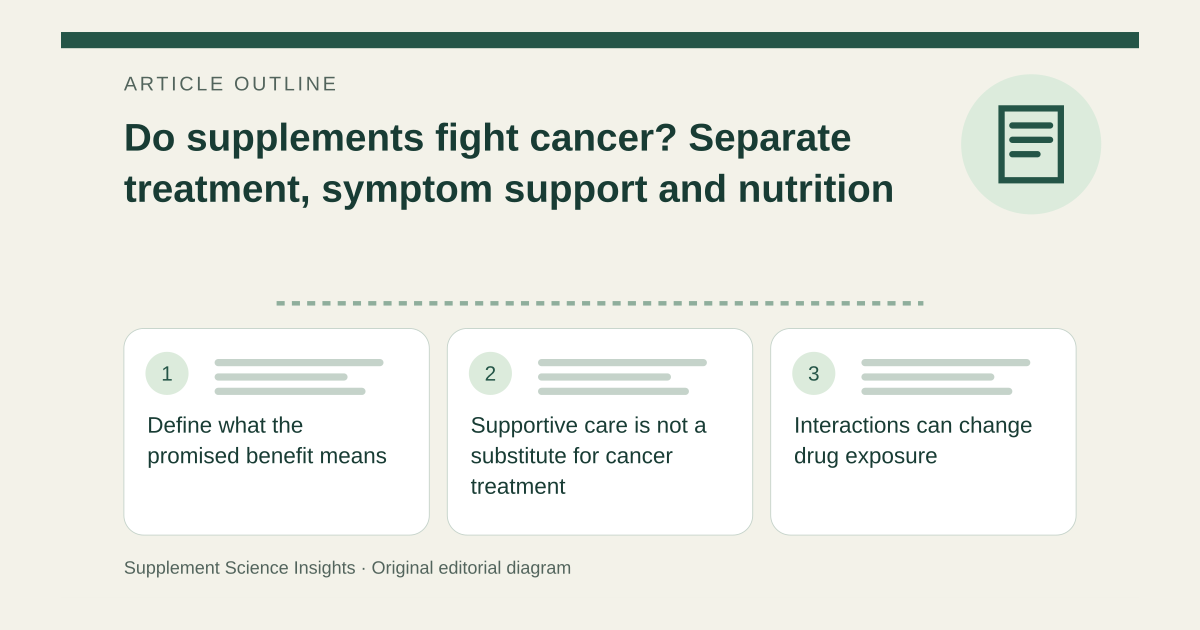
Define what the promised benefit means
A claim to support appetite, correct a deficiency or relieve a treatment symptom is different from shrinking a tumor or extending survival. NCI states that nutrition trends, foods and supplements have not been proved to slow, cure or prevent recurrence of cancer. [1]
Supportive care is not a substitute for cancer treatment
A clinician may identify a nutritional need or consider an evidence-based approach to a particular symptom. That does not validate a retail anticancer claim. Keep the treatment objective and the supportive-care objective explicit when discussing a product. [1]
Interactions can change drug exposure
NCI describes ways complementary products may affect absorption, metabolism or elimination of cancer medicines. A product does not have to be directly toxic to interfere with treatment. Ingredient amounts, concentrated extracts and the exact drug regimen belong in the review. [2]
Laboratory effects are an early research stage
A cell experiment is not the same as a clinical benefit in people. A proposed mechanism leaves questions about achievable exposure, harms and patient outcomes. Do not replace a treatment plan on the strength of a laboratory headline or a testimonial. [3]
Bring the complete product to the treatment team
Imagine a blend promises immune support during chemotherapy. Share the label and planned dose before starting it, and ask which specific outcome has evidence and whether the formula interacts with the regimen. Do not infer tumor benefit from the marketing phrase. [2][1]
| Situation | Interpretation |
|---|---|
| Correcting a deficiency | Nutritional care |
| Reducing a symptom | Supportive-care outcome |
| Shrinking a tumor | Requires cancer-treatment evidence |
Sources for this article
- Diets, Supplements, and Cancer - NCI
Source consulted: 2026-09-20. This is a reference resource, not a claim that we conducted the studies or tested a product. - Cancer Therapy Interactions With Foods and Dietary Supplements - NCI
Source consulted: 2026-09-20. This is a reference resource, not a claim that we conducted the studies or tested a product. - Dietary Supplements: What You Need to Know
Source consulted: 2026-09-20. This is a reference resource, not a claim that we conducted the studies or tested a product.