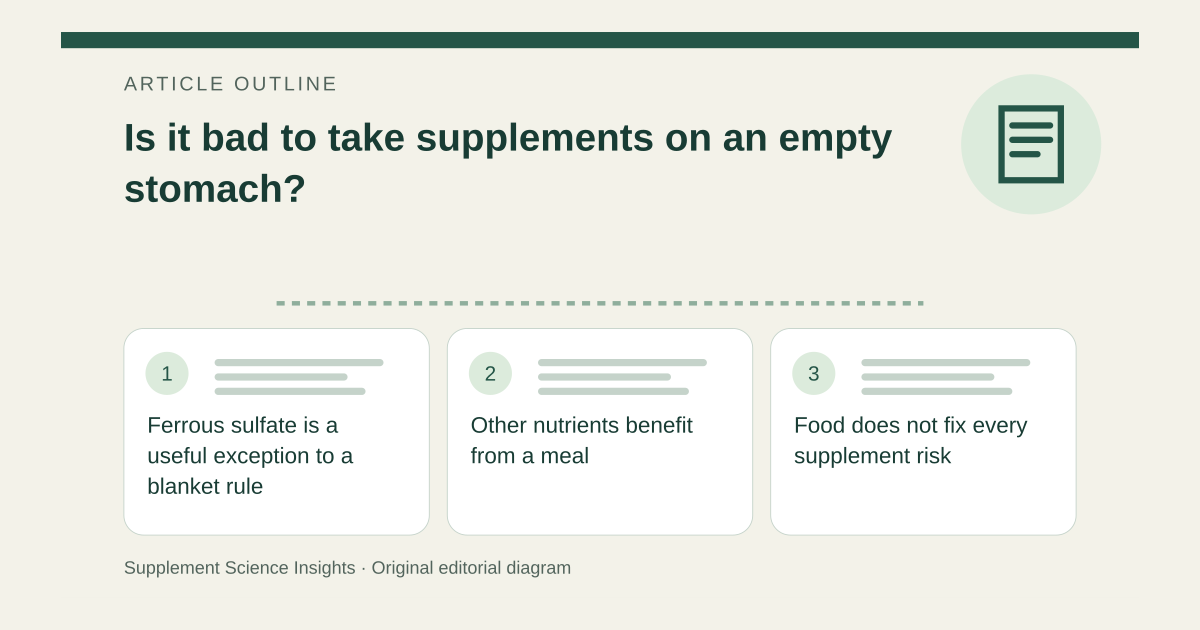
Ferrous sulfate is a useful exception to a blanket rule
NHS says it works best on an empty stomach, ideally 30 minutes before food or two hours afterward. If it upsets the stomach, it can be taken with or after food. Follow your own prescription and seek advice if side effects prevent regular treatment. [1]
Other nutrients benefit from a meal
Vitamin D is best absorbed with a meal or snack containing some fat. Calcium carbonate is more dependent on stomach acid than citrate, and food generally improves calcium absorption. Taking everything fasting is therefore not a reliable optimization strategy. [2][3]
Food does not fix every supplement risk
An excessive dose, an allergy or a drug interaction cannot be assumed safe simply because a capsule is taken with lunch. ODS cautions that active ingredients, high doses and multiple products can cause harm. Review the product rather than masking repeated problems with a larger meal. [4]
Change the plan deliberately
Imagine someone develops nausea after starting three supplements before breakfast. Record the products and timing and discuss which are actually needed. A clinician or pharmacist can distinguish a tolerability adjustment from a reason to stop or investigate further. [4][1]
| Decision | Useful check |
|---|---|
| Ferrous sulfate | May be intended fasting |
| Vitamin D | Meal containing fat helps |
| Repeated nausea | Review the regimen |
| Interaction or excess | Food is not a remedy |
Sources for this article
- How and when to take ferrous sulfate - NHS
Source consulted: 2026-09-21. This is a reference resource, not a claim that we conducted the studies or tested a product. - Vitamin D - Consumer
Source consulted: 2026-09-21. This is a reference resource, not a claim that we conducted the studies or tested a product. - Calcium - Health Professional Fact Sheet
Source consulted: 2026-09-21. This is a reference resource, not a claim that we conducted the studies or tested a product. - Dietary Supplements: What You Need to Know - Consumer
Source consulted: 2026-09-21. This is a reference resource, not a claim that we conducted the studies or tested a product.