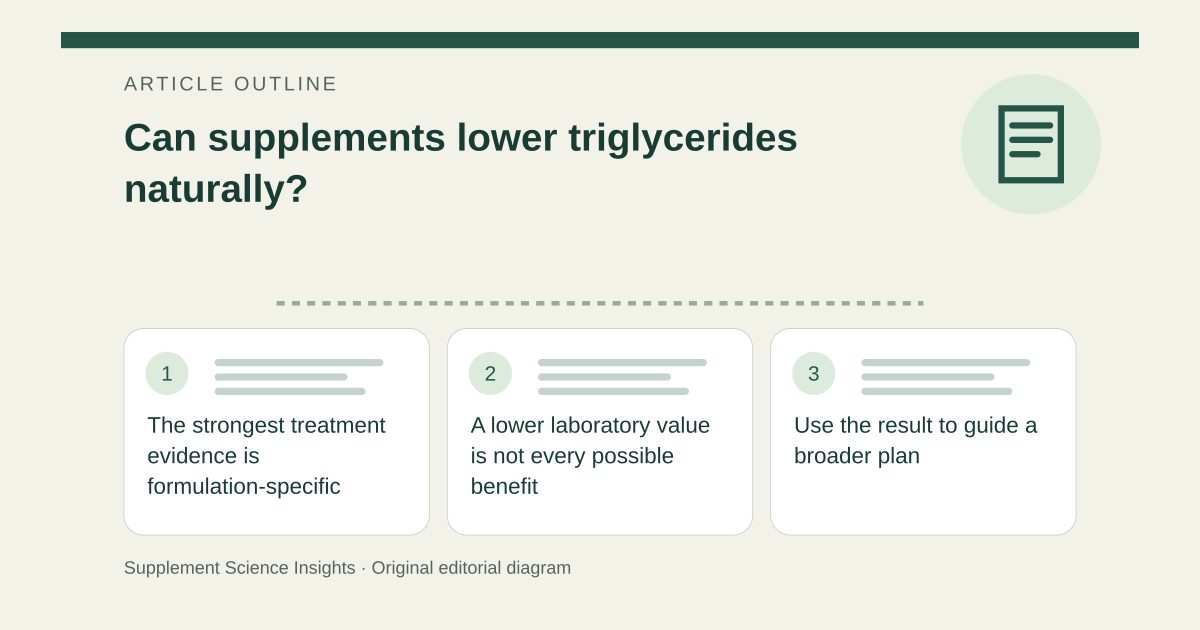
The strongest treatment evidence is formulation-specific
ODS describes prescription omega-3 regimens used for high triglycerides. The amount of EPA and DHA differs from total fish-oil weight, so a gram on the front of a capsule bottle is not necessarily a gram of those fatty acids. Do not construct a prescription-equivalent regimen by counting ordinary capsules. [1]
A lower laboratory value is not every possible benefit
ODS discusses differing cardiovascular-outcome findings between trials and formulations. Triglyceride reduction does not establish that every omega-3 supplement prevents heart attacks. The formulation, study population and background treatment determine which claim the evidence supports. [1]
Use the result to guide a broader plan
Imagine a blood test is substantially elevated. Review alcohol, eating patterns, diabetes control, medicines and treatment options with the clinician rather than simply adding a supplement. Lifestyle changes and prescribed therapy may both be relevant. Repeat testing should evaluate the agreed plan; do not substitute a supplement for recommended lipid treatment. [1][2]
| Question | Useful check |
|---|---|
| What is the target? | A defined symptom or clinical result |
| What is the exposure? | Full formula and medicines |
| What supports the claim? | Evidence matching the person and outcome |
Sources for this article
- Omega-3 Fatty Acids - Health Professional Fact Sheet
Source consulted: 2026-09-21. This is a reference resource, not a claim that we conducted the studies or tested a product. - Dietary Supplements: What You Need to Know - Consumer
Source consulted: 2026-09-21. This is a reference resource, not a claim that we conducted the studies or tested a product.